
Musca domestica
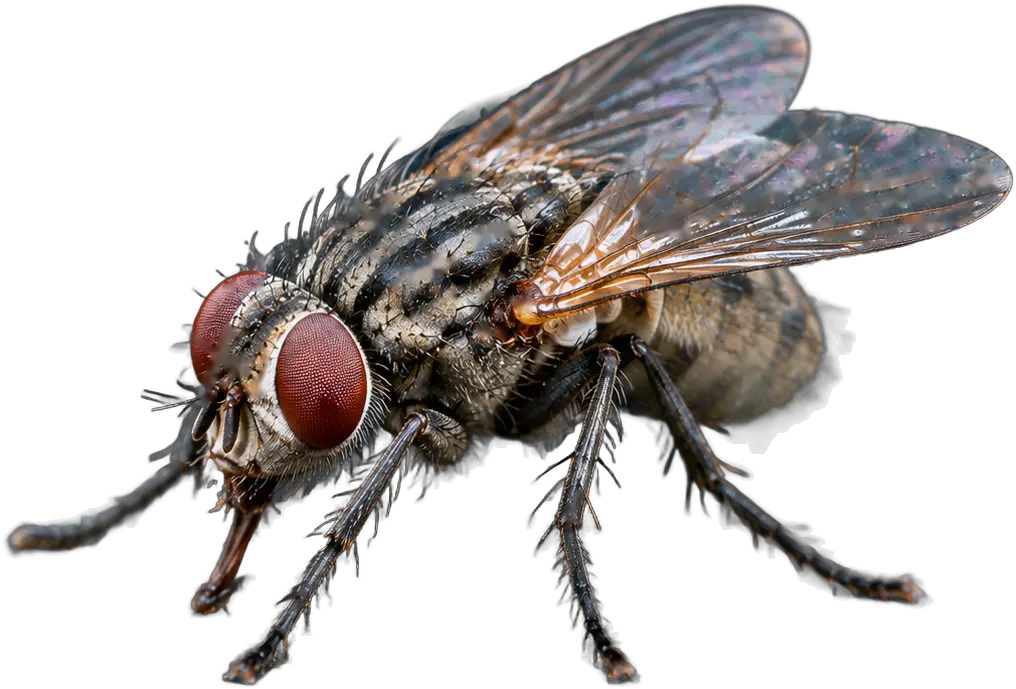
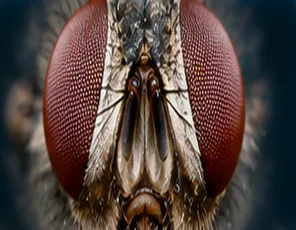
- 01Large red eyes. Big compound eyes that nearly meet in males.
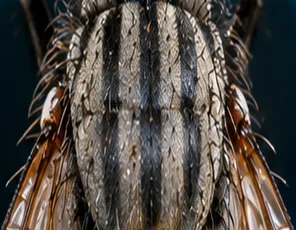
- 02Four dark stripes. Four lengthwise stripes on the gray thorax. The quickest check.
- 03Clear wings. Held apart at rest, angled back.
- 04Sponging mouthparts. No bite. It spits on food and sponges it up, which is how it spreads germs.
- Adult size
- About 1/4 in
- Color
- Gray, four dark stripes on the thorax
- Breeds in
- Garbage, food waste, pet waste, manure
- Eggs
- Batches of 75 to 100
- Egg to adult
- About a week in hot weather
Figures: University of Minnesota Extension, Flies.
How do you recognize a house fly?
Look at the thorax, the section behind the head. A house fly has four dark stripes running lengthwise on a gray background. The abdomen is gray to tan with darker markings, the eyes are large and red-brown, and the wings are clear. Adults are about a quarter of an inch long.
Two look-alikes come up often. Flesh flies are larger and have three stripes and a checkered abdomen. Cluster flies are a bit larger, duller and have golden hairs on the thorax.
Where do house flies breed?
In moist, decaying material: garbage, food scraps, pet waste, manure, grass clippings and compost. The University of Minnesota notes females lay their eggs in batches of 75 to 100, usually in garbage. Larvae feed for several days, crawl to a drier spot to pupate, and emerge as adults.
What does a house fly problem tell you?
A few flies in summer are normal. A constant stream indoors means one of three things: a breeding site on or near the property, a way in that stays open, or both. Common sources are dumpster and recycling areas, trash cans that are rarely washed, dog runs, compost bins against the house, and in businesses, floor drains and grease buildup.
How Graduate handles house flies
We find where they are coming from. That means checking trash and recycling handling, outdoor waste near doors, and in commercial kitchens the drains and grease traps. We tighten screens, door sweeps and air curtains at entrances. Light traps and targeted treatment knock down the adults once the source is under control. The fly control page covers the full approach.
Which fly is it?
Each fly points to a different breeding source. Tap one for its full profile.
- Size
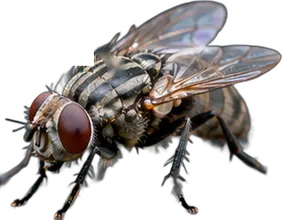
- About 1/4 in
- Look
- Gray, four dark stripes on the thorax
- Breeds in
- Garbage, manure, food waste
- Seen
- Kitchens, dumpster areas, around trash
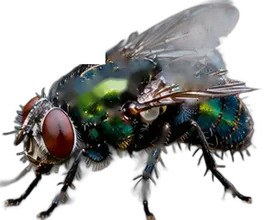
- Size
- 1/4 to 1/2 in
- Look
- Shiny metallic green, blue or copper
- Breeds in
- Dead animals, meat scraps, garbage
- Seen
- A sudden swarm often means a dead rodent in a wall
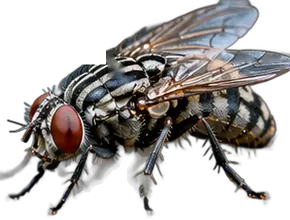
- Size
- 1/4 to 1/2 in
- Look
- Gray, three dark stripes, checkered abdomen
- Breeds in
- Carrion and decaying meat. Gives birth to live larvae
- Seen
- Near garbage, dumpsters, dead animals
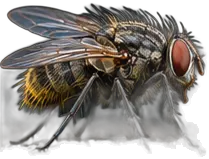
- Size
- 3/8 to 1/2 in, larger than a house fly
- Look
- Dull gray, golden hairs on the thorax
- Breeds in
- Outdoors. Larvae live in earthworms
- Seen
- Sunny windows and attics, fall through spring
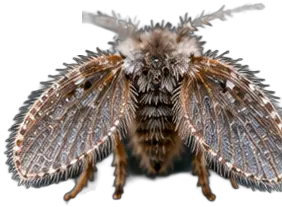
- Size
- 1/16 to 3/16 in
- Look
- Fuzzy, moth-like, wings held like a roof
- Breeds in
- Slime film inside drains and traps
- Seen
- Bathroom and kitchen walls near drains
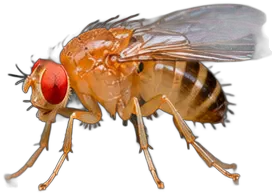
- Size
- About 1/8 in
- Look
- Tan, bright red eyes
- Breeds in
- Fermenting fruit, spills, drains, recycling
- Seen
- Hovering over produce and trash
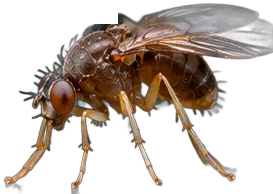
- Size
- 1/16 to 1/8 in
- Look
- Dark, humped back, runs in short bursts
- Breeds in
- Decaying matter, often a broken drain or sewer line under a slab
- Seen
- Bathrooms, basements, commercial kitchens
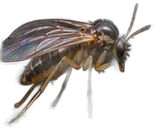
- Size
- 1/16 to 1/8 in
- Look
- Dark, slender, long legs and antennae
- Breeds in
- Wet potting soil and damp organic matter
- Seen
- Around houseplants and windows
Figures: University of Minnesota Extension, Flies, University of Kentucky, Small Flies, Penn State Extension, Cluster Flies.
Treatment for this pest is covered under Fly Control.
Common questions
Do house flies bite?
No. House flies have sponging mouthparts. They liquefy food with saliva and soak it up. The fly that looks like a house fly but bites your ankles is the stable fly, a different species.
Why are house flies a health concern?
They feed and breed on garbage and waste, then land on food and counters. Bacteria travel on their feet and mouthparts and in the specks they leave behind.
How fast do they multiply?
Fast. A female lays batches of 75 to 100 eggs, and in hot weather the whole cycle can finish in about a week. A trash can left for a few summer days is enough to produce a new generation.
Why are there so many house flies around my dumpster?
Dumpsters with food waste and liquid in the bottom are ideal breeding sites. Emptying more often, keeping lids closed and rinsing out the bottom cuts the population sharply.
Do fly lights and traps solve the problem?
They help by catching adults, especially in kitchens and entrances, but they never reach the larvae. They work best after the breeding source is fixed.
How far do house flies travel?
Minnesota Extension notes they are strong fliers that can cover miles, though most stay within a couple of miles of where they developed.
Get in touch
Tell us what you are seeing
Four questions, answered by a person within one business day. If it is urgent, call: the line is answered at any hour.
Fly Control
Start with a free consultation
A consultation is a phone call with us about your problem. You tell us what you are seeing, where in the building, and how long it has been going on. We tell you what it most likely is, what is causing it, and what it will take to fix. Most routine work can be priced on that call.
There is no charge and no obligation. If we are not the right fit, we will say so before anyone books a visit.
Call (631) 212-9601Schedule an inspection
Answered at any hour.