
Drosophila spp.
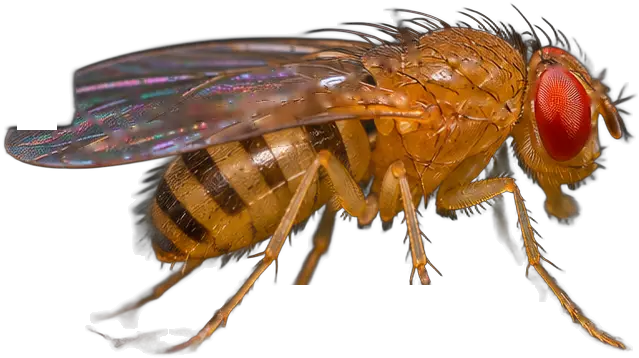
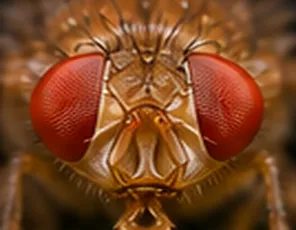
- 01Bright red eyes. The fastest way to tell a fruit fly.
- 02Tan thorax. Tan to light brown, not metallic.
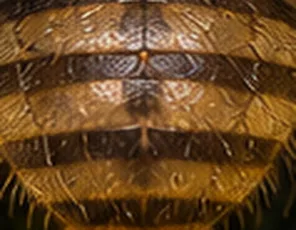
- 03Banded abdomen. Darker bands across the back end.
- 04Clear wings. Clear, with little patterning.
- Adult size
- About 1/8 in
- Color
- Tan, red eyes
- Breeds in
- Fermenting fruit, spills, drains, recycling
- Egg to adult
- About 8 to 10 days in warm conditions
- Seen
- Over produce, trash and drinks
Figures: University of Kentucky, Small Flies.
What does a fruit fly look like?
About 1/8 inch long, tan to light brown, with bright red eyes and a banded abdomen. The red eyes are the fastest way to tell them from other small flies.
Where do they breed?
On the surface of fermenting food. Overripe bananas and tomatoes are the classic source, but anything with sugar and yeast works: juice and soda spills, beer and wine residue, recycling bins, garbage disposals, drains with food buildup, mops and cleaning rags. Restaurants and bars often have them breeding in floor drains under the bar.
Why do they keep coming back?
Because the eggs and larvae are in a source nobody has found yet, and a new generation emerges every week or so. Spraying adults does nothing for the next round.
How Graduate handles fruit flies
We search every possible source, including the ones under and behind appliances, in drains and in recycling. Once each source is removed or cleaned, traps take care of the remaining adults. For bars, restaurants and food plants we document findings for your sanitation records. See the fly control page for more.
Which fly is it?
Each fly points to a different breeding source. Tap one for its full profile.
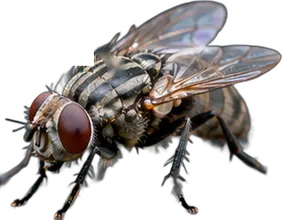
- Size
- About 1/4 in
- Look
- Gray, four dark stripes on the thorax
- Breeds in
- Garbage, manure, food waste
- Seen
- Kitchens, dumpster areas, around trash
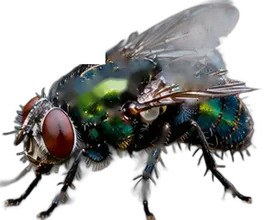
- Size
- 1/4 to 1/2 in
- Look
- Shiny metallic green, blue or copper
- Breeds in
- Dead animals, meat scraps, garbage
- Seen
- A sudden swarm often means a dead rodent in a wall
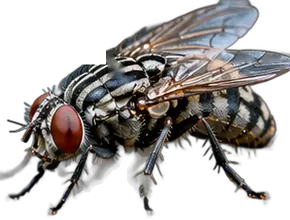
- Size
- 1/4 to 1/2 in
- Look
- Gray, three dark stripes, checkered abdomen
- Breeds in
- Carrion and decaying meat. Gives birth to live larvae
- Seen
- Near garbage, dumpsters, dead animals
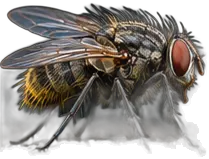
- Size
- 3/8 to 1/2 in, larger than a house fly
- Look
- Dull gray, golden hairs on the thorax
- Breeds in
- Outdoors. Larvae live in earthworms
- Seen
- Sunny windows and attics, fall through spring
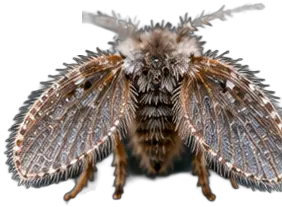
- Size
- 1/16 to 3/16 in
- Look
- Fuzzy, moth-like, wings held like a roof
- Breeds in
- Slime film inside drains and traps
- Seen
- Bathroom and kitchen walls near drains
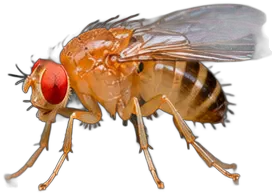
- Size
- About 1/8 in
- Look
- Tan, bright red eyes
- Breeds in
- Fermenting fruit, spills, drains, recycling
- Seen
- Hovering over produce and trash
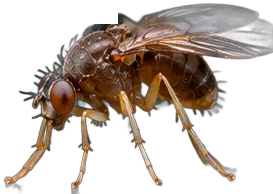
- Size
- 1/16 to 1/8 in
- Look
- Dark, humped back, runs in short bursts
- Breeds in
- Decaying matter, often a broken drain or sewer line under a slab
- Seen
- Bathrooms, basements, commercial kitchens
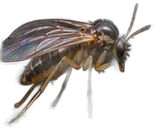
- Size
- 1/16 to 1/8 in
- Look
- Dark, slender, long legs and antennae
- Breeds in
- Wet potting soil and damp organic matter
- Seen
- Around houseplants and windows
Figures: University of Minnesota Extension, Flies, University of Kentucky, Small Flies, Penn State Extension, Cluster Flies.
Treatment for this pest is covered under Fly Control.
Common questions
I threw out the fruit. Why are they still here?
There is another source. Common ones people miss are a forgotten potato or onion, a recycling bin, a mop, a sink or floor drain, and the gap under a refrigerator or dishwasher where spills collect.
Do vinegar traps work?
They catch adults and help confirm you have fruit flies, but they do not stop the breeding. Only removing the source does that.
Is every small fly a fruit fly?
No. If the eyes are not red, it may be a phorid fly, drain fly or fungus gnat, each of which breeds somewhere different.
How do fruit flies get inside?
On produce brought home from the store and through open doors and screens. Once one female finds fermenting food, a population builds quickly.
Can fruit flies breed in a drain?
Yes. Drains with food and sugar buildup, especially under bars and in commercial kitchens, are common breeding sites.
Do they carry disease?
They can carry bacteria from garbage to food and counters, which is why they matter in food businesses.
Get in touch
Tell us what you are seeing
Four questions, answered by a person within one business day. If it is urgent, call: the line is answered at any hour.
Fly Control
Start with a free consultation
A consultation is a phone call with us about your problem. You tell us what you are seeing, where in the building, and how long it has been going on. We tell you what it most likely is, what is causing it, and what it will take to fix. Most routine work can be priced on that call.
There is no charge and no obligation. If we are not the right fit, we will say so before anyone books a visit.
Call (631) 212-9601Schedule an inspection
Answered at any hour.