
Get in touch
Tell us what you are seeing
Four questions, answered by a person within one business day. If it is urgent, call: the line is answered at any hour.
Every fly problem is a breeding-site problem. Find what the larvae are living in, remove it, and the adults stop coming.
Which fly is it?
Each fly points to a different breeding source. Tap one for its full profile.
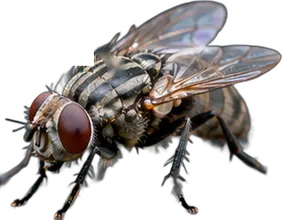
- Size
- About 1/4 in
- Look
- Gray, four dark stripes on the thorax
- Breeds in
- Garbage, manure, food waste
- Seen
- Kitchens, dumpster areas, around trash
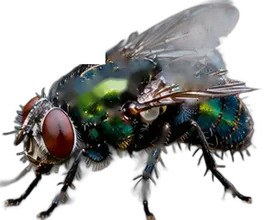
- Size
- 1/4 to 1/2 in
- Look
- Shiny metallic green, blue or copper
- Breeds in
- Dead animals, meat scraps, garbage
- Seen
- A sudden swarm often means a dead rodent in a wall
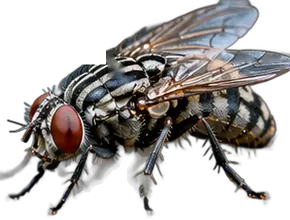
- Size
- 1/4 to 1/2 in
- Look
- Gray, three dark stripes, checkered abdomen
- Breeds in
- Carrion and decaying meat. Gives birth to live larvae
- Seen
- Near garbage, dumpsters, dead animals
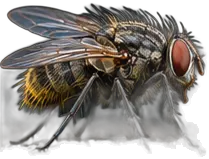
- Size
- 3/8 to 1/2 in, larger than a house fly
- Look
- Dull gray, golden hairs on the thorax
- Breeds in
- Outdoors. Larvae live in earthworms
- Seen
- Sunny windows and attics, fall through spring
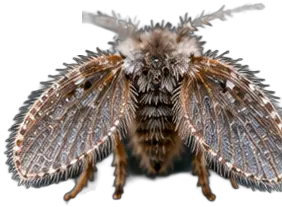
- Size
- 1/16 to 3/16 in
- Look
- Fuzzy, moth-like, wings held like a roof
- Breeds in
- Slime film inside drains and traps
- Seen
- Bathroom and kitchen walls near drains
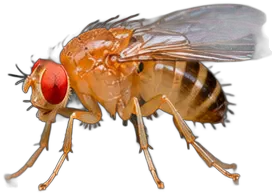
- Size
- About 1/8 in
- Look
- Tan, bright red eyes
- Breeds in
- Fermenting fruit, spills, drains, recycling
- Seen
- Hovering over produce and trash
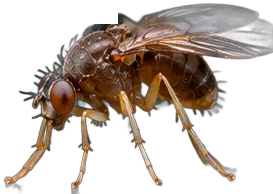
- Size
- 1/16 to 1/8 in
- Look
- Dark, humped back, runs in short bursts
- Breeds in
- Decaying matter, often a broken drain or sewer line under a slab
- Seen
- Bathrooms, basements, commercial kitchens
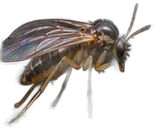
- Size
- 1/16 to 1/8 in
- Look
- Dark, slender, long legs and antennae
- Breeds in
- Wet potting soil and damp organic matter
- Seen
- Around houseplants and windows
Figures: University of Minnesota Extension, Flies, University of Kentucky, Small Flies, Penn State Extension, Cluster Flies.
Why does the type of fly matter?
Because each fly points to a different source. Flies spend most of their life as larvae, living in a very specific kind of material. The adults you see are only the last stage. Identify the fly, and you know what kind of material to look for and roughly where it is.
The comparison above shows the eight flies we deal with most in homes and businesses on Long Island and in New York City. The sections below explain where each one breeds and how we track it down.
House fly
The house fly is gray, about a quarter of an inch long, with four dark stripes on the thorax. It breeds in garbage, food waste, pet waste and manure. Indoors, a steady house fly problem usually traces back to trash that sits too long, a dumpster or compost close to a door, or an opening that lets them in. We look at waste handling, door and window screening, and air flow at entrances.
Full profile: House fly.
Blow fly (bottle fly)
Blow flies are the shiny metallic green, blue or copper flies. Indoors they almost always mean something died: a mouse or rat in a wall, ceiling or crawlspace, or a bird in a chimney. A sudden burst of them at one window is a classic sign. We locate the carcass, often with help from the flies’ own movement, remove it, and seal the opening the animal used. Where rodents are the cause, that ties into our rodent control and structural exclusion work.
Full profile: Blow fly.
Flesh fly
Flesh flies are gray with three dark stripes on the thorax and a checkered abdomen. They breed in carrion and decaying meat, and the female deposits live larvae rather than eggs. Like blow flies, flesh flies indoors usually point to a dead animal or spoiled meat in trash, and the response is the same: find it and remove it.
Full profile: Flesh fly.
Cluster fly
Cluster flies are a little larger than house flies, dull gray, with golden hairs on the thorax. They do not breed indoors at all. Their larvae live in earthworms in the soil. Adults move into attics and wall voids in late summer to spend the winter, then show up on sunny windows. See our cluster fly profile for the full story. The fix is sealing the roofline and siding gaps before they move in.
Drain fly (moth fly)
Drain flies are tiny, fuzzy and moth-like, and rest on walls near sinks, tubs and floor drains. They breed in the slime film inside drains, traps, overflows and condensate lines. We confirm which drain is producing them, then the film has to be scrubbed out mechanically. Pouring bleach down the drain rarely reaches it.
Full profile: Drain fly.
Fruit fly
Fruit flies are small and tan with bright red eyes. They breed in anything fermenting: overripe produce, spilled juice, wine and beer residue, recycling bins and drains with food buildup. We find every source, including the ones people miss such as a forgotten onion, a mop or a floor drain under a bar.
Full profile: Fruit fly.
Phorid fly (scuttle fly)
Phorid flies are small, dark and hump-backed, and they tend to run across surfaces in short bursts instead of flying away. They breed in moist decaying matter, and indoors the source is often hidden: a cracked drain or sewer line under a slab, a leak inside a wall, or organic buildup in a floor drain. Phorid problems that persist after cleaning often need a plumber to inspect or camera the lines.
Full profile: Phorid fly.
Fungus gnat
Fungus gnats are small, dark and slender, with long legs and antennae, and they hover around houseplants and windows. They breed in wet potting soil and damp organic matter. Letting the soil dry out between waterings and removing overwatered plants is usually most of the fix.
Full profile: Fungus gnat.
How Graduate handles flies
Identify the fly. A photo or a few specimens on tape is often enough to start.
Find the breeding source. Drains, trash areas, wall voids, crawlspaces, soil, and dead animals. The source is the job.
Remove it. Clean or repair the drain, remove the carcass, correct the waste handling, dry the soil.
Close the way in. Screens, door sweeps and sealed gaps keep outdoor flies and overwintering cluster flies outside.
Knock down the adults if needed. Traps and targeted treatment help once the source is gone, not instead of it.
For restaurants and food businesses, see our commercial pest control page. If you are not sure what you have, contact us or call (631) 212-9601 for a free consultation.
Common questions
Why do the flies keep coming back after I spray?
Because the spray only reaches adults. The next generation is still developing in the drain, the trash, the wall void or the soil, and it keeps emerging on schedule. Lasting control means finding and removing that breeding material.
I suddenly have dozens of big shiny flies. What happened?
Metallic green or blue flies appearing in numbers indoors usually mean something died nearby, most often a mouse or rat inside a wall, ceiling or crawlspace. The flies bred in the carcass and are now emerging. The carcass has to be found and removed, and the gap the animal used should be sealed.
What are the tiny fuzzy flies in my bathroom?
Almost certainly drain flies, also called moth flies. They breed in the slime film that lines drains, traps and overflows. Cleaning that film out mechanically, not just pouring something down the drain, is what ends the problem.
The small flies are not near any fruit. What else could they be?
If they are dark, hump-backed and run across surfaces in short bursts, they are probably phorid flies. Phorids often breed in a broken drain or sewer line under a slab, or in organic buildup inside a wall. They are one of the most commonly misdiagnosed fly problems we see.
Why are there slow, sluggish flies on my windows in winter?
Those are usually cluster flies. They do not breed indoors. They spend the winter in attics and wall voids and wander toward light on warm days. The fix is sealing the gaps they use to get in before late summer.
Do you treat restaurants and food businesses?
Yes. In food facilities, flies are a sanitation and inspection issue. We find the breeding sources, which are commonly floor drains, grease buildup, dumpster areas and recycling, and document the findings for your records.
Fly Control
Start with a free consultation
A consultation is a phone call with us about your problem. You tell us what you are seeing, where in the building, and how long it has been going on. We tell you what it most likely is, what is causing it, and what it will take to fix. Most routine work can be priced on that call.
There is no charge and no obligation. If we are not the right fit, we will say so before anyone books a visit.
Call (631) 212-9601Schedule an inspection
Answered at any hour.