
Calliphoridae
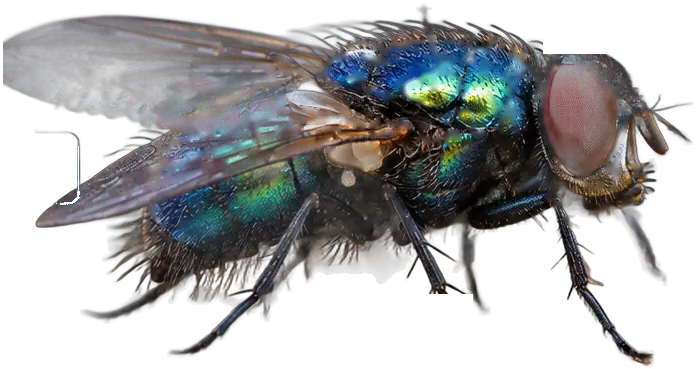
- 01Clear wings. Large and clear.
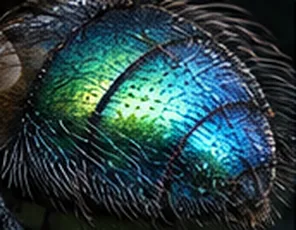
- 02Metallic body. Shiny green, blue or copper. No other common house fly shines like this.
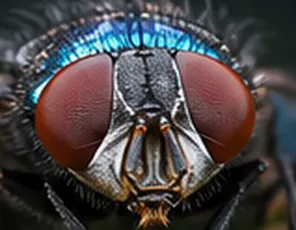
- 03Red eyes. Large and dark red.
- 04Robust, bristly abdomen. Stouter than a house fly.
- Adult size
- 1/4 to 1/2 in
- Color
- Metallic green, blue or copper
- Breeds in
- Dead animals, meat scraps, garbage, pet waste
- Indoors means
- Usually a dead rodent or bird nearby
- Life cycle
- About four weeks or less
Figures: University of Minnesota Extension, Flies, University of Kentucky, Cluster, Face and Blow Flies.
What does a blow fly look like?
The metallic shine is the giveaway. Blow flies are green, blue, bronze or copper, and they glint in the light in a way no house fly does. They are stout and bristly, 1/4 to 1/2 inch long, with large red eyes. People call the green ones green bottle flies and the blue ones blue bottle flies.
Where do they breed?
In dead animals, meat scraps and other protein-rich waste. Outdoors that includes roadkill, garbage and pet waste. Indoors it is almost always a carcass hidden somewhere in the building.
What does it mean when they appear indoors?
Usually that a rodent, squirrel or bird died inside the structure, often after poison bait or a trap behind a wall. As the maggots finish feeding they leave the carcass to pupate, and adults appear several days later, often clustered at one window or light.
How Graduate handles blow flies
Find and remove the carcass. We trace the flies, the odor and any staining to the spot, open access where needed and remove it.
Find out how the animal got in. A dead rodent in a wall means there are gaps in the building. Our rodent control and structural exclusion work closes them so it does not happen again.
Clean up the stragglers. Remaining adults are trapped or treated once the source is gone. See the fly control page for more.
Which fly is it?
Each fly points to a different breeding source. Tap one for its full profile.
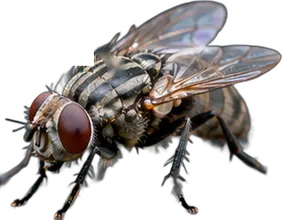
- Size
- About 1/4 in
- Look
- Gray, four dark stripes on the thorax
- Breeds in
- Garbage, manure, food waste
- Seen
- Kitchens, dumpster areas, around trash
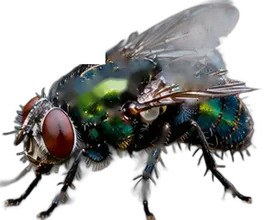
- Size
- 1/4 to 1/2 in
- Look
- Shiny metallic green, blue or copper
- Breeds in
- Dead animals, meat scraps, garbage
- Seen
- A sudden swarm often means a dead rodent in a wall
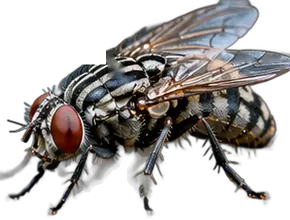
- Size
- 1/4 to 1/2 in
- Look
- Gray, three dark stripes, checkered abdomen
- Breeds in
- Carrion and decaying meat. Gives birth to live larvae
- Seen
- Near garbage, dumpsters, dead animals
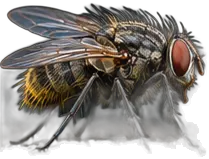
- Size
- 3/8 to 1/2 in, larger than a house fly
- Look
- Dull gray, golden hairs on the thorax
- Breeds in
- Outdoors. Larvae live in earthworms
- Seen
- Sunny windows and attics, fall through spring
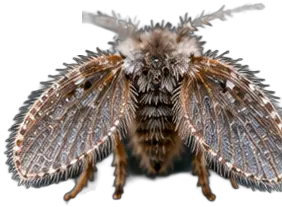
- Size
- 1/16 to 3/16 in
- Look
- Fuzzy, moth-like, wings held like a roof
- Breeds in
- Slime film inside drains and traps
- Seen
- Bathroom and kitchen walls near drains
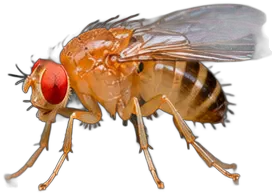
- Size
- About 1/8 in
- Look
- Tan, bright red eyes
- Breeds in
- Fermenting fruit, spills, drains, recycling
- Seen
- Hovering over produce and trash
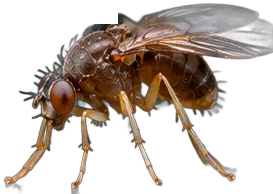
- Size
- 1/16 to 1/8 in
- Look
- Dark, humped back, runs in short bursts
- Breeds in
- Decaying matter, often a broken drain or sewer line under a slab
- Seen
- Bathrooms, basements, commercial kitchens
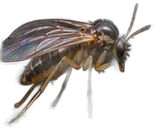
- Size
- 1/16 to 1/8 in
- Look
- Dark, slender, long legs and antennae
- Breeds in
- Wet potting soil and damp organic matter
- Seen
- Around houseplants and windows
Figures: University of Minnesota Extension, Flies, University of Kentucky, Small Flies, Penn State Extension, Cluster Flies.
Treatment for this pest is covered under Fly Control.
Common questions
Why did dozens of shiny flies suddenly appear in one room?
An animal died in the wall, ceiling, attic, chimney or crawlspace, and flies bred in it. The University of Minnesota notes that a sudden population of adult blow flies can appear several days after an animal dies in a hidden spot.
Will they go away on their own?
Eventually, once the carcass is consumed, but that can take a week or more and the odor can linger. Removing the carcass is faster and stops the next round.
How do you find the dead animal?
The flies help. They gather nearest where they emerged. Odor, stains on a ceiling and maggots dropping from a light fixture narrow it down further.
Are blow flies dangerous?
They breed in carcasses and waste and then land on surfaces, so they can carry bacteria. Indoors they are mainly a sign of a bigger problem that needs attention.
Can blow flies appear in winter?
Yes. Kentucky Extension notes they sometimes overwinter in buildings in small numbers and show up on warm days in late winter and early spring.
What should I do with the maggots I find?
Vacuum them up and dispose of the bag outdoors. They are leaving the carcass to pupate, so finding where they came from is the next step.
Get in touch
Tell us what you are seeing
Four questions, answered by a person within one business day. If it is urgent, call: the line is answered at any hour.
Fly Control
Start with a free consultation
A consultation is a phone call with us about your problem. You tell us what you are seeing, where in the building, and how long it has been going on. We tell you what it most likely is, what is causing it, and what it will take to fix. Most routine work can be priced on that call.
There is no charge and no obligation. If we are not the right fit, we will say so before anyone books a visit.
Call (631) 212-9601Schedule an inspection
Answered at any hour.