
Lepisma saccharinum

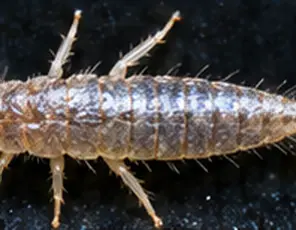
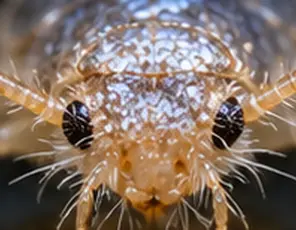
- 01Long antennae. Thread-like, often as long as the body.
- 02Silvery scales. Overlapping scales give the metallic sheen. They rub off easily.
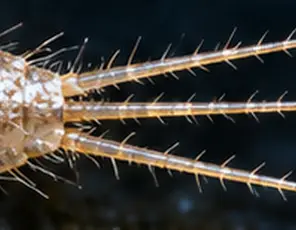
- 03Three tails. Two side cerci and a middle filament, nearly as long as the body.
- 04Fast legs. Runs quickly and hides from light.
- Size
- About 1/2 in
- Color
- Uniform silvery gray
- Eats
- Paper, book bindings, wallpaper paste, starch, cereals
- Lives
- Damp, cool basements, bathrooms, laundry rooms
- Lifespan
- 2 to 3 years or more
Figures: Penn State Extension, Silverfish and Firebrats, University of Maryland Extension, Silverfish and Firebrats.
What does a silverfish look like?
About 1/2 inch long, flat and carrot-shaped, tapering to the tail, and covered in silvery gray scales that rub off easily. It has long, thread-like antennae, small compound eyes on the sides of the head, and three long bristles at the tail that are almost as long as the body. It never has wings and runs with a quick, fish-like wiggle.
What damage do they do?
They graze on the surface of paper, photographs, book bindings, wallpaper and cardboard, leaving irregular holes, scraped areas and small droppings. Starched fabrics such as cotton and linen can also be damaged.
Why are they in my house?
Moisture and food. Damp basements, bathrooms and laundry rooms hold the humidity they need, and stored papers, boxes and books supply the food. They often arrive in cardboard boxes from storage units or other houses.
How Graduate handles silverfish
We find where they are living, usually stored paper and cardboard in a damp area, and deal with the humidity that lets them thrive. We seal cracks along baseboards, pipes and the foundation and use monitors to confirm the result. See occasional invader control for how silverfish compare with the other moisture pests.
Which occasional invader is it?
All four come in for moisture. Look at the tail end first. Tap one for its full profile.
- Size
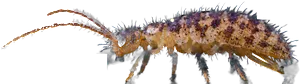
- 1/16 to 1/8 in
- Tail end
- Hidden jumping fork underneath
- Moves
- Pops into the air when touched
- Points to
- Wet soil, mold, leaks, overwatered plants

- Size
- About 1/2 in
- Tail end
- Three long bristles
- Moves
- Fast, fish-like wiggle
- Points to
- Damp basements, stored paper and boxes

- Size
- About 5/8 in
- Tail end
- Pincers (forceps)
- Moves
- Crawls, rarely flies
- Points to
- Wet mulch and leaf litter at the foundation
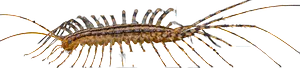
- Size
- 1 to 1 1/2 in body
- Tail end
- Very long last pair of legs
- Moves
- Very fast, up walls
- Points to
- Damp space and other insects to eat
Figures: University of Kentucky, Springtails (ENT-420), Penn State Extension, Silverfish and Firebrats, Penn State Extension, European Earwigs, Iowa State University Extension, House Centipede.
Treatment for this pest is covered under Occasional Invader Control.
Common questions
Do silverfish bite?
No. They are harmless to people and pets. The damage is to paper, books, wallpaper, cardboard and some fabrics.
What do silverfish eat?
Starches and sugars first: paper, glue, book bindings, wallpaper paste, cereals and flour. They will also eat protein, including dead insects, and can live a long time without food.
Where do they hide?
Cool, damp, dark places: basements, laundry rooms, under sinks, behind baseboards and in boxes of stored papers and books.
What is a firebrat?
A close relative that looks similar but is mottled gray and prefers heat, around furnaces, water heaters and hot pipes, while silverfish prefer cooler, damper spots.
How long do silverfish live?
Two to three years or more, which is why a population can build slowly and quietly in stored boxes before anyone notices.
How do I get rid of them?
Lower the humidity, get stored paper and cardboard off the floor and into plastic bins, and seal cracks along baseboards and around pipes. Those steps make the house a poor place for them.
Get in touch
Tell us what you are seeing
Four questions, answered by a person within one business day. If it is urgent, call: the line is answered at any hour.
Occasional Invader Control
Start with a free consultation
A consultation is a phone call with us about your problem. You tell us what you are seeing, where in the building, and how long it has been going on. We tell you what it most likely is, what is causing it, and what it will take to fix. Most routine work can be priced on that call.
There is no charge and no obligation. If we are not the right fit, we will say so before anyone books a visit.
Call (631) 212-9601Schedule an inspection
Answered at any hour.