
Get in touch
Tell us what you are seeing
Four questions, answered by a person within one business day. If it is urgent, call: the line is answered at any hour.
Pantry moths and beetles live inside the food. Find every infested package, remove it, and the adults stop appearing.
Which moth is it?
One eats your food, two eat your wool. Tap a moth for its full profile.
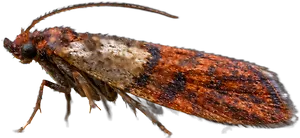
- Wingspan
- 1/2 to 5/8 in
- Look
- Two-tone wings: pale base, copper-brown outer half
- Larvae eat
- Dry foods: cereal, flour, nuts, dried fruit, pet food, birdseed
- Seen
- Kitchens and pantries. Webbing in food
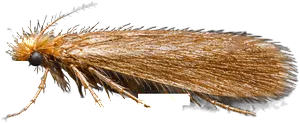
- Wingspan
- About 1/2 in, body about 1/4 in
- Look
- Plain golden wings, reddish-gold head tuft
- Larvae eat
- Wool, silk, fur, feathers. Not food
- Seen
- Closets, rugs, stored textiles. Avoids light
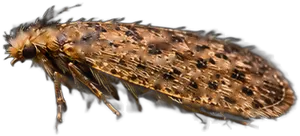
- Wingspan
- 3/8 to 1/2 in
- Look
- Brownish wings with faint dark spots
- Larvae eat
- Wool, fur, feathers, hides. Not food
- Seen
- Larva drags a small silk case. Closets, attics
Figures: University of Minnesota Extension, Indianmeal moth, Rutgers NJAES, Clothes Moths (FS1182), University of Florida, Clothes Moths (IG090).
Which pantry beetle is it?
All three are about 1/10 inch. Look at the antennae, the wing covers and the edges of the thorax. Tap one for its full profile.
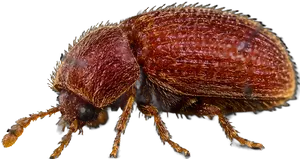
- Size
- About 1/10 to 1/7 in
- Look
- Oval, head hidden under the thorax, lined wing covers
- Antennae
- End in a 3-segment club
- Eats
- Flour, spices, dry mixes, pet food, even books
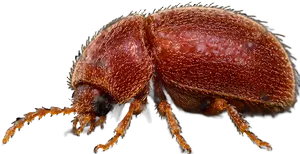
- Size
- About 1/10 to 1/8 in
- Look
- Rounder and humped, head tucked under, smooth wing covers
- Antennae
- Saw-toothed, no club
- Eats
- Spices like paprika, tobacco, dried herbs, pet food
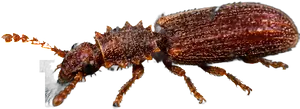
- Size
- About 1/10 in
- Look
- Long, flat, six saw teeth on each side of the thorax
- Antennae
- Short, small club at the tip
- Eats
- Cereal, flour, rice, dried fruit. Cannot break whole kernels
Figures: University of Florida, Drugstore Beetle (EENY-228), University of Florida, Cigarette Beetle (EENY-227), Virginia Cooperative Extension, Sawtoothed Grain Beetle.
Moth or beetle?
The first split is easy. Stored product pests come in two shapes: small moths that fly around the kitchen at night, and tiny beetles about a tenth of an inch long that crawl on shelves and windowsills. Both live inside dry food as larvae. The comparisons above show the three moths and three beetles we find most often in homes and food businesses on Long Island and in New York City. Tap any of them for the full profile.
Two of the moths are not food pests at all. Webbing and casemaking clothes moths feed on wool, silk, fur and feathers. They are on this page because people mistake them for pantry moths and the other way around, and the fix is completely different.
Indianmeal moth
The most common pantry moth. Its forewings are two-tone: pale gray to tan near the body and copper brown on the outer half. The larvae are off-white caterpillars with brown heads, up to about half an inch long, and they web dry food together with silk. Cereal, flour, nuts, dried fruit, chocolate, pet food and birdseed are all on the menu. Full grown larvae often leave the food and crawl up walls or across ceilings to pupate, which is how many people first notice them.
Full profile: Indianmeal moth.
Webbing clothes moth
A small, plain golden moth with a reddish-gold tuft of hair on its head. It shuns light, so you see it in closets and under furniture, not circling a kitchen light. The larvae digest keratin and eat wool, cashmere, silk, fur, felt and feathers, leaving irregular holes and silk tunnels.
Full profile: Webbing clothes moth.
Casemaking clothes moth
Similar in size to the webbing clothes moth but brownish, with faint dark spots on the wings. Its larva builds a small portable silk case out of the fibers it eats and drags it along. Finding those little tubes on fabric, walls or baseboards is the giveaway.
Full profile: Casemaking clothes moth.
Drugstore beetle
A small oval reddish-brown beetle whose head is hidden under a hood when seen from above. Its wing covers have rows of tiny pits that look like stripes, and its antennae end in a three-segment club. It eats an unusually wide range of dry material: flour, mixes, spices, pet food, dried flowers and even book bindings. Adults fly to windows and lights.
Full profile: Drugstore beetle.
Cigarette beetle
Nearly identical to the drugstore beetle at a glance, but rounder and more humped, with smooth wing covers and saw-toothed antennae with no club. Despite the name, in homes it is most often found in paprika, chili powder and other spices, dried herbs and pet food. It is active at dusk and flies toward light.
Full profile: Cigarette beetle.
Sawtoothed grain beetle
A slender, flat, dark brown beetle with six saw-like teeth along each side of the thorax. It cannot chew into whole kernels, so it lives in processed and broken food: cereal, flour, rice, pasta, dried fruit and nuts. It does not fly; it walks in or arrives in a package, and its flat body slips through gaps in folded packaging.
Full profile: Sawtoothed grain beetle.
How Graduate handles stored product pests
We start by identifying the insect, because a pantry moth, a clothes moth and a spice beetle each point to a different source. Then we go package by package through the pantry, cabinets and anywhere food is kept, including the places people forget: pet food bins, birdseed in the garage, holiday baking supplies, decorative dried flowers and the gap behind a stove where flour has spilled. Infested products are removed, shelves are vacuumed, and remaining food is sealed in hard containers. Monitoring traps confirm the population is gone.
For restaurants, food warehouses and processing plants, we tie this into a written monitoring program with trap maps and counts, which supports your food safety consulting and audit records.
Common questions
Where did pantry bugs come from? My kitchen is clean.
Almost always from a package. Eggs and tiny larvae ride in on flour, cereal, rice, spices, pet food or birdseed from the store or warehouse. A clean kitchen does not prevent it; sealed containers and quick turnover of dry goods do.
Are the small moths in my kitchen clothes moths?
Probably not. Moths flying around a kitchen at night are usually Indianmeal moths. Clothes moths are smaller, plain golden or brownish, avoid light, and stay near wool, fur and stored textiles. They do not eat food at all.
Will freezing kill pantry pests?
Yes, given enough time. University of Florida guidance for anobiid beetles is about a week at freezing temperatures or colder. Freezing a product you want to keep, then sealing it in a glass or hard plastic container, is a reliable step.
Do I have to throw everything out?
No. Discard what is infested, inspect the rest, and seal what is clean. We help sort it, because the source is often something forgotten: birdseed in the garage, a bag of dog food, dried flowers, potpourri or an old spice jar.
Do pheromone traps get rid of them?
Traps are a monitoring tool. They catch males and show where activity is highest, which helps find the source, but they do not stop the larvae already living in food. Each species also needs its own lure.
Do you handle food warehouses and processing plants?
Yes. In commercial food handling, stored product insects are an audit issue. We set up monitoring, track counts by location, find the infested lots and document everything for your food safety records.
Stored Product Pest Control
Start with a free consultation
A consultation is a phone call with us about your problem. You tell us what you are seeing, where in the building, and how long it has been going on. We tell you what it most likely is, what is causing it, and what it will take to fix. Most routine work can be priced on that call.
There is no charge and no obligation. If we are not the right fit, we will say so before anyone books a visit.
Call (631) 212-9601Schedule an inspection
Answered at any hour.