
Tineola bisselliella
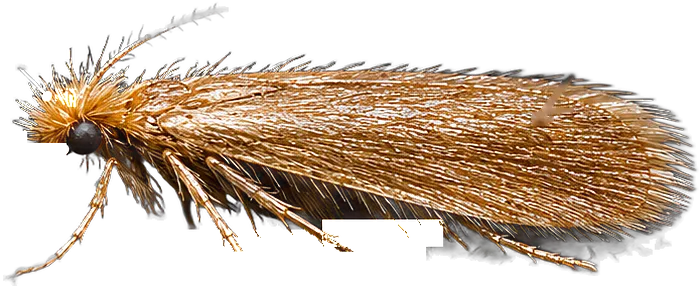
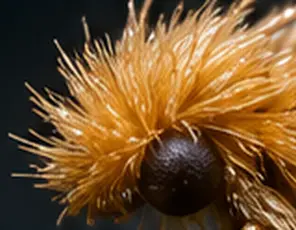
- 01Reddish-gold head tuft. A crest of hairy scales on top of the head.
- 02Dark eyes. Small head with dark eyes.
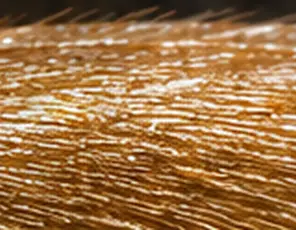
- 03Plain golden wings. Shiny buff to golden, with no spots.
- 04Fringed edges. Narrow wings edged with long hair fringes.
- Wingspan
- About 1/2 in
- Body
- About 1/4 in
- Larvae eat
- Wool, silk, fur, feathers, felt. Keratin, not food
- Signs
- Irregular holes, silk tunnels, pellet-like droppings
- Seen
- Closets, under rugs and furniture. Shuns light
Figures: Rutgers NJAES, Clothes Moths (FS1182), University of Florida, Clothes Moths (IG090).
What does a webbing clothes moth look like?
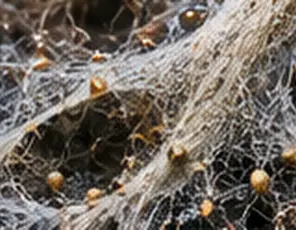
A small moth, about a quarter inch long with a wingspan near half an inch. The wings are narrow, shiny buff to golden, with no spots, and fringed with long hairs. The head carries a reddish-gold tuft. Unlike pantry moths, it shuns light and tends to run or hop rather than fly.
What are the signs?
Irregular holes in wool and other animal-fiber items, thinned patches on rugs, silk tunnels and patches of webbing on the surface, and small pellet-like droppings that are often the same color as the fabric.
Why is it on the stored product page?
Because it is so often confused with pantry moths. The two need completely different responses: a pantry moth problem lives in food, a clothes moth problem lives in textiles.
How Graduate handles clothes moths
We confirm the species, then locate the infested items, which are often stored wool, a rug edge under furniture or a forgotten fur. Those are cleaned, laundered, frozen or discarded, the area is vacuumed thoroughly, and pheromone traps monitor for any remaining activity. See stored product pest control for the comparison with pantry moths.
Which moth is it?
One eats your food, two eat your wool. Tap a moth for its full profile.
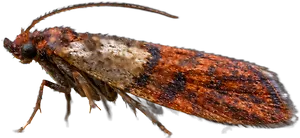
- Wingspan
- 1/2 to 5/8 in
- Look
- Two-tone wings: pale base, copper-brown outer half
- Larvae eat
- Dry foods: cereal, flour, nuts, dried fruit, pet food, birdseed
- Seen
- Kitchens and pantries. Webbing in food
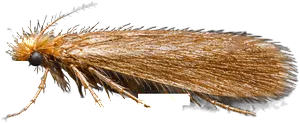
- Wingspan
- About 1/2 in, body about 1/4 in
- Look
- Plain golden wings, reddish-gold head tuft
- Larvae eat
- Wool, silk, fur, feathers. Not food
- Seen
- Closets, rugs, stored textiles. Avoids light
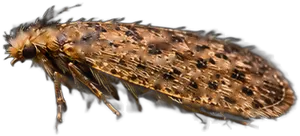
- Wingspan
- 3/8 to 1/2 in
- Look
- Brownish wings with faint dark spots
- Larvae eat
- Wool, fur, feathers, hides. Not food
- Seen
- Larva drags a small silk case. Closets, attics
Figures: University of Minnesota Extension, Indianmeal moth, Rutgers NJAES, Clothes Moths (FS1182), University of Florida, Clothes Moths (IG090).
Treatment for this pest is covered under Stored Product Pest Control.
Common questions
Do clothes moths eat food?
No. Clothes moth larvae feed on animal fibers that contain keratin: wool, cashmere, silk, fur, felt, feathers and hair. Moths in the pantry are almost always a different species.
Do the adult moths make the holes?
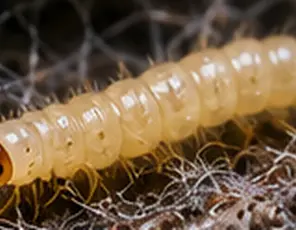
No. Adults do not feed. The holes come from the larvae, which are shiny white caterpillars with dark heads, usually hidden in seams, folds and under rugs.
Why do they go after some sweaters and not others?
Soiled items are more attractive. Sweat, food stains and body oils give the larvae nutrients they need beyond keratin, which is why clean, stored wool is less at risk.
Where do I look for them?
Dark, undisturbed places: the back of closets, under wool rugs and heavy furniture, in stored blankets and garment bags, felt piano parts, and wherever pet hair and lint collect.
How is this different from a casemaking clothes moth?
The webbing clothes moth is plain golden with no spots, and its larvae spin webbing tunnels on the fabric. The casemaking clothes moth is browner with faint spots, and its larvae carry a portable silk case.
Can carpet beetles cause the same damage?
Yes. Carpet beetle larvae also eat animal fibers. They are bristly and leave shed skins rather than silk webbing, so the signs help tell the two apart.
Get in touch
Tell us what you are seeing
Four questions, answered by a person within one business day. If it is urgent, call: the line is answered at any hour.
Stored Product Pest Control
Start with a free consultation
A consultation is a phone call with us about your problem. You tell us what you are seeing, where in the building, and how long it has been going on. We tell you what it most likely is, what is causing it, and what it will take to fix. Most routine work can be priced on that call.
There is no charge and no obligation. If we are not the right fit, we will say so before anyone books a visit.
Call (631) 212-9601Schedule an inspection
Answered at any hour.