
Lasioderma serricorne
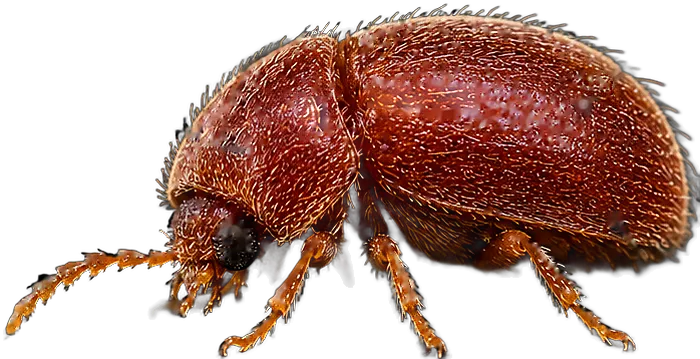
- 01Humped, head tucked under. Rounder than a drugstore beetle; the head bends down out of sight.
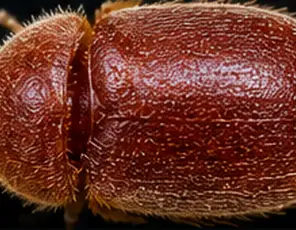
- 02Smooth wing covers. Fine hairs, but no rows of pits or grooves.
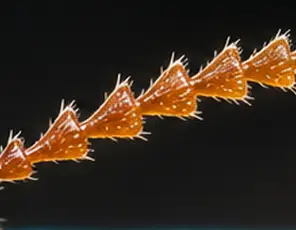
- 03Saw-toothed antennae. Each segment is toothed like a saw blade. No club.
- 04Light reddish brown. Often a shade lighter than a drugstore beetle.
- Size
- 2 to 3 mm, about 1/10 to 1/8 in
- Look
- Rounded oval, humped, smooth wing covers
- Antennae
- Saw-toothed segments, no club
- Eats
- Paprika and chili powder, tobacco, dried herbs, pet food, cocoa
- Active
- Dusk and night; flies toward light
Figures: University of Florida, Cigarette Beetle (EENY-227), University of Florida, Drugstore Beetle (EENY-228).
What does a cigarette beetle look like?
A rounded oval beetle about 2 to 3 mm long, roughly a tenth to an eighth of an inch, reddish brown and covered in fine hairs. The head bends down under the thorax, giving it a humped look from the side and hiding the head from above. The wing covers are smooth, and the antennae are saw-toothed along their length rather than ending in a club.
What does the larva look like?
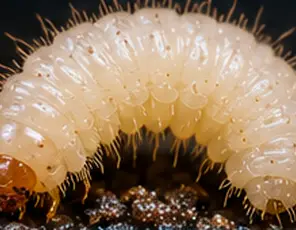
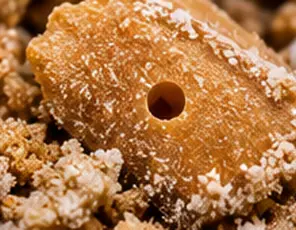
A small white grub, curled and noticeably hairy. It feeds inside the product, spins a cocoon there, and the adult chews a round exit hole when it emerges.
Where do they come from?
An infested product, usually a spice, herb, pet food or dried decor item. Red spices like paprika and chili powder are classic sources, and an old jar at the back of a cabinet can supply beetles for months.
How Graduate handles cigarette beetles
We identify the beetle and trace it to every infested item, checking spices one jar at a time along with herbs, teas, pet food and decor. Those items are removed, cabinets are vacuumed and clean products are sealed. Traps confirm the result. See stored product pest control for the full comparison.
Which pantry beetle is it?
All three are about 1/10 inch. Look at the antennae, the wing covers and the edges of the thorax. Tap one for its full profile.
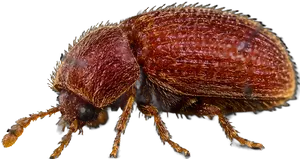
- Size
- About 1/10 to 1/7 in
- Look
- Oval, head hidden under the thorax, lined wing covers
- Antennae
- End in a 3-segment club
- Eats
- Flour, spices, dry mixes, pet food, even books
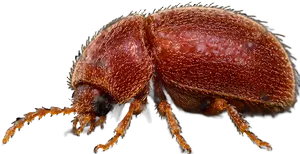
- Size
- About 1/10 to 1/8 in
- Look
- Rounder and humped, head tucked under, smooth wing covers
- Antennae
- Saw-toothed, no club
- Eats
- Spices like paprika, tobacco, dried herbs, pet food
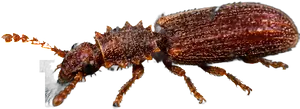
- Size
- About 1/10 in
- Look
- Long, flat, six saw teeth on each side of the thorax
- Antennae
- Short, small club at the tip
- Eats
- Cereal, flour, rice, dried fruit. Cannot break whole kernels
Figures: University of Florida, Drugstore Beetle (EENY-228), University of Florida, Cigarette Beetle (EENY-227), Virginia Cooperative Extension, Sawtoothed Grain Beetle.
Treatment for this pest is covered under Stored Product Pest Control.
Common questions
I do not smoke. Why do I have cigarette beetles?
The name comes from its history in tobacco warehouses. In homes it is far more often in paprika, chili powder, cayenne, dried herbs, tea, dry pet food, cocoa and dried fruit.
How do I tell it from a drugstore beetle?
Cigarette beetles have smooth wing covers and saw-toothed antennae with no club. Drugstore beetles have striped wing covers with rows of pits and a three-segment club at the end of each antenna.
When are they most active?
At dusk and through the night. Adults fly and are attracted to light, so they gather at windows and fixtures in the evening.
Do the adults eat?
No. Adults do not feed. The larvae do all the damage inside the product before the adults chew their way out.
Can they get into closed jars?
They can chew through paper, cardboard and thin plastic packaging. Glass jars and hard containers with tight lids are the safest storage for spices.
Do they damage anything besides food?
Yes. They also infest dried flower arrangements, herbarium specimens, book bindings and some upholstery stuffing made from plant material.
Get in touch
Tell us what you are seeing
Four questions, answered by a person within one business day. If it is urgent, call: the line is answered at any hour.
Stored Product Pest Control
Start with a free consultation
A consultation is a phone call with us about your problem. You tell us what you are seeing, where in the building, and how long it has been going on. We tell you what it most likely is, what is causing it, and what it will take to fix. Most routine work can be priced on that call.
There is no charge and no obligation. If we are not the right fit, we will say so before anyone books a visit.
Call (631) 212-9601Schedule an inspection
Answered at any hour.