
Oryzaephilus surinamensis
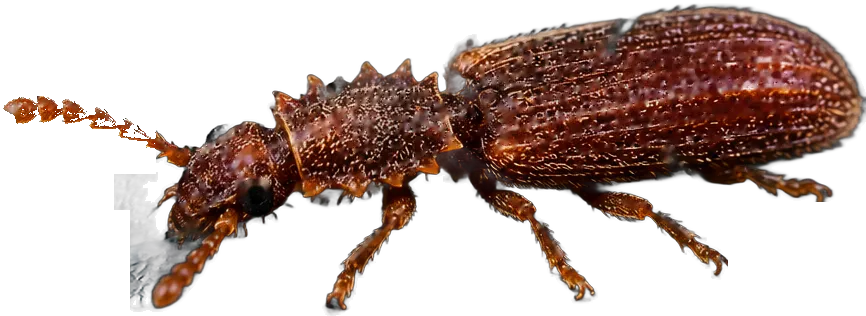
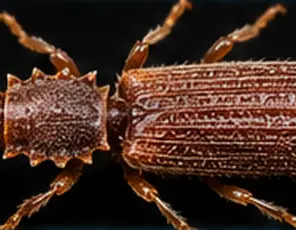
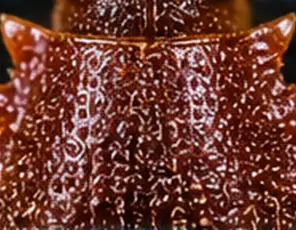
- 01Saw-toothed thorax. Six tooth-like points along each side. The name says it all.
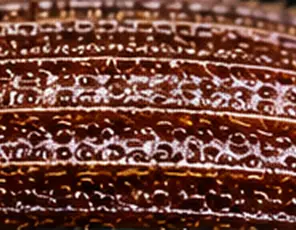
- 02Ridged wing covers. Long grooves running the length of the back.
- 03Small antennal club. Short antennae ending in a small club.
- 04Long, flat body. Flat enough to slip into poorly sealed packages.
- Size
- 2.5 to 3 mm, about 1/10 in
- Look
- Slender, flat, dark brown
- Thorax
- Six saw teeth on each side
- Eats
- Cereal, flour, rice, pasta, dried fruit, nuts, candy
- Flies
- No. It walks in, or comes home in a package
Figures: Virginia Cooperative Extension, Sawtoothed Grain Beetle, Oklahoma State Extension, Sawtoothed Grain Beetle.
What does a sawtoothed grain beetle look like?
A small, active beetle 2.5 to 3 mm long, about a tenth of an inch, slender and flat, dark brown. The thorax has six tooth-like points along each side, which is where the name comes from. The wing covers have long grooves running down the back, and the antennae are short and end in a small club.
What does the larva look like?
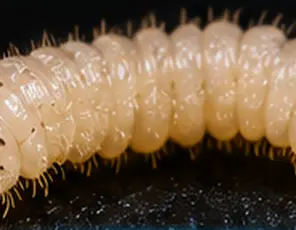
A yellowish-white larva with a brown head, about an eighth of an inch long, tapering toward the tail. It crawls freely through the food rather than staying in one spot.
Where do they come from?
Grocery stores, warehouses and mills, inside packaged cereal, flour, rice, dried fruit and pet food. Once home, they spread to any nearby package that is not tightly sealed.
How Graduate handles sawtoothed grain beetles
We identify the beetle, then check every dry food product in the pantry and storage areas, since they move between packages. Infested items are removed, shelves and cracks are vacuumed, and remaining food goes into hard sealed containers. See stored product pest control for how it compares with the drugstore and cigarette beetles.
Which pantry beetle is it?
All three are about 1/10 inch. Look at the antennae, the wing covers and the edges of the thorax. Tap one for its full profile.
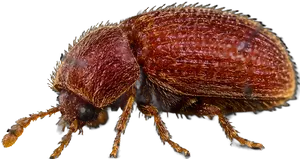
- Size
- About 1/10 to 1/7 in
- Look
- Oval, head hidden under the thorax, lined wing covers
- Antennae
- End in a 3-segment club
- Eats
- Flour, spices, dry mixes, pet food, even books
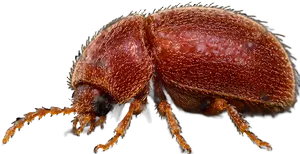
- Size
- About 1/10 to 1/8 in
- Look
- Rounder and humped, head tucked under, smooth wing covers
- Antennae
- Saw-toothed, no club
- Eats
- Spices like paprika, tobacco, dried herbs, pet food
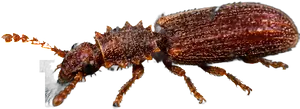
- Size
- About 1/10 in
- Look
- Long, flat, six saw teeth on each side of the thorax
- Antennae
- Short, small club at the tip
- Eats
- Cereal, flour, rice, dried fruit. Cannot break whole kernels
Figures: University of Florida, Drugstore Beetle (EENY-228), University of Florida, Cigarette Beetle (EENY-227), Virginia Cooperative Extension, Sawtoothed Grain Beetle.
Treatment for this pest is covered under Stored Product Pest Control.
Common questions
How did they get into a sealed box?
Their flat body lets them slip through gaps in folded packaging and imperfect seals, and they can chew into thin packaging. Many also arrive already inside a product from the store.
Can they fly?
No. Sawtoothed grain beetles walk. Its close relative, the merchant grain beetle, looks almost the same but can fly.
What do they eat?
Processed and broken food: cereal, flour, cornmeal, rice, pasta, dried fruit, nuts, candy and pet food. They cannot attack whole, undamaged kernels, so they follow other damage or milling.
How long do they live?
Adults commonly live 6 to 10 months, and some survive up to three years, so a few can keep turning up long after the main source is gone.
How fast do they multiply?
In warm conditions the life cycle takes about 3 to 4 weeks, and a female can lay more than 250 eggs, so several generations can build up in one season.
Are they harmful?
They do not bite or spread disease, but they contaminate food and can spread from one product to every unsealed package nearby.
Get in touch
Tell us what you are seeing
Four questions, answered by a person within one business day. If it is urgent, call: the line is answered at any hour.
Stored Product Pest Control
Start with a free consultation
A consultation is a phone call with us about your problem. You tell us what you are seeing, where in the building, and how long it has been going on. We tell you what it most likely is, what is causing it, and what it will take to fix. Most routine work can be priced on that call.
There is no charge and no obligation. If we are not the right fit, we will say so before anyone books a visit.
Call (631) 212-9601Schedule an inspection
Answered at any hour.