
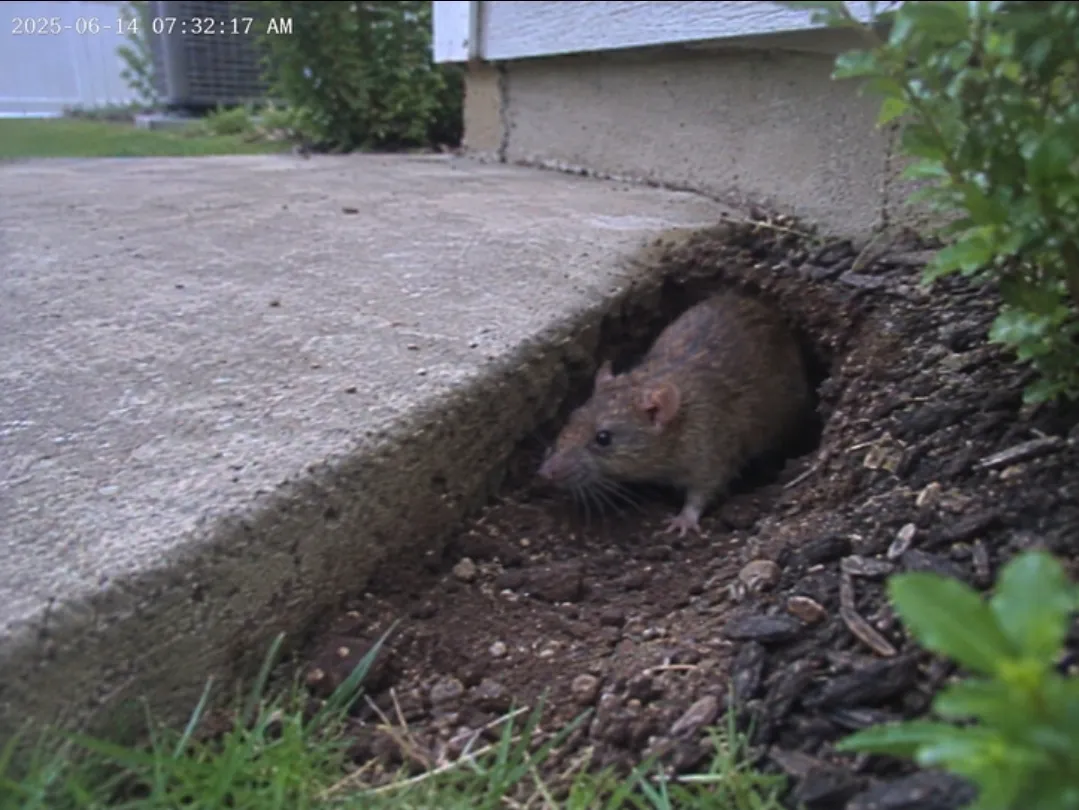
Rodent pressure and the evidence it leaves · reviewed September 2026
Key points:
- A drop in temperature is the trigger, not a specific number. Complaints on Long Island begin as soon as overnight temperatures start falling, often while daytime highs are still in the 60s.
- A house mouse can enter through a gap the width of a pencil — roughly 1/4 inch.
- Field mice (white-footed and deer mice) are the defining fall rodent across Suffolk and northern Nassau. They climb well and commonly enter at the roofline rather than the foundation.
- Field mice are a primary reservoir host for tick-borne pathogens including Lyme disease, so field mouse pressure and tick pressure should be assessed together.
- Norway rats enter at or below grade, following foundations, slabs, sheds, decks, and utility and sewer lines.
- Trapping removes animals. Only physical exclusion stops the building from refilling the following season.
What triggers fall rodent activity?
Fall rodent activity is triggered by habitat loss, not cold. Three things change outdoors at the same time: ground cover dies back and exposes rodents to predators, the seed, fruit and insect supply that sustained them through summer collapses, and soil temperature drops so shallow burrow systems stop holding heat. All of that pressure pushes rodents toward the most stable structure available.
It doesn’t take a cold snap. A drop in temperature is enough, and the shift often begins while daytime highs are still comfortable and in the 60s. Homeowners who wait for the first frost to think about rodents are already weeks behind the activity.
This is why homeowners describe the problem as sudden. Nothing changed inside the house. The population was already on the property. The season simply relocated it.
Which rodents come indoors on Long Island?
Three rodents account for nearly all structural activity in Nassau County and Suffolk County: the house mouse (Mus musculus), the field mouse (Peromyscus leucopus, the white-footed mouse, along with the closely related deer mouse), and the Norway rat (Rattus norvegicus).
House mice exploit small, overlooked building details: the curled corner of a garage door seal, the annular space around a gas or water line, a dryer vent flap that no longer closes, the seam where an addition was tied into the original foundation. They need a gap of about 1/4 inch, and once established they live indoors year round.
Field mice are the species most homeowners on Long Island are actually dealing with in the fall, and the one most often misidentified as a house mouse. They live in the surrounding landscape all year and move into structures specifically as a seasonal response — the defining pest of October and November across Suffolk and northern Nassau.
Norway rats work from the ground up. They burrow along foundations, beneath slabs, sheds and decks, and follow utility trenches and sewer laterals. Their entry points are usually at or below grade and larger than most homeowners expect.
Roof rats (Rattus rattus) are frequently mentioned online but are not a typical New York pest. In 25 years of field work in the region, we’ve encountered them once.
How do you tell a field mouse from a house mouse?
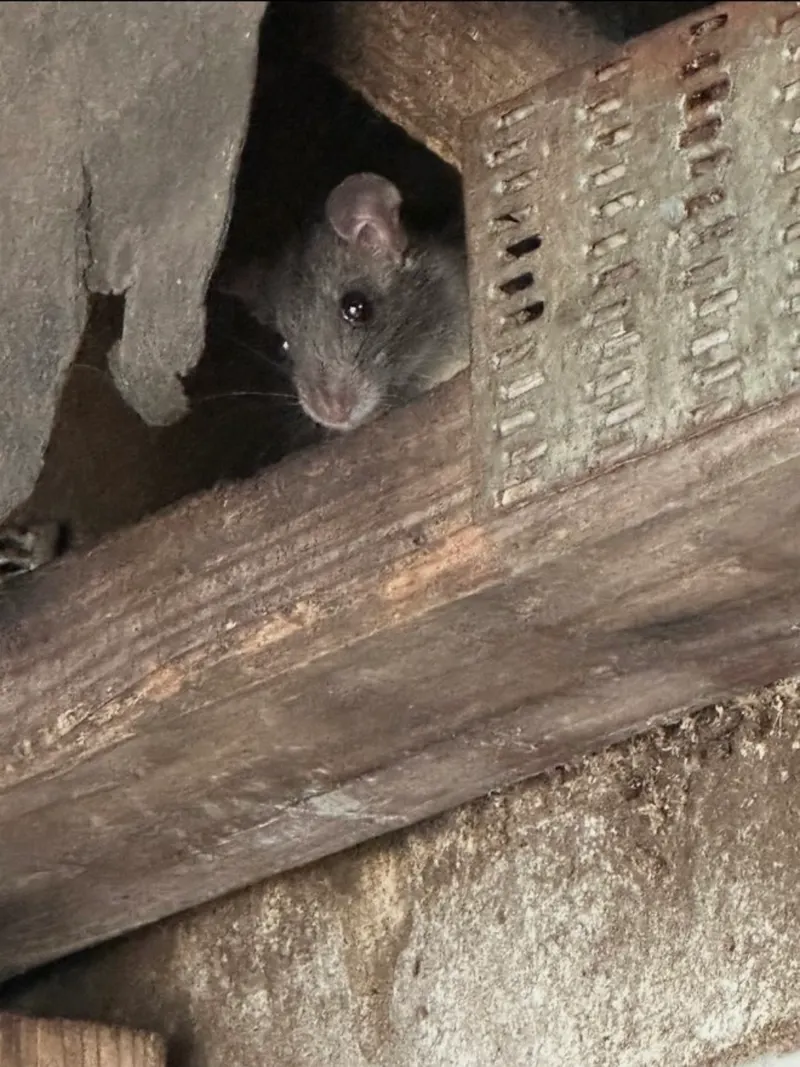
A field mouse has a sharply bicolored tail, white feet, and a white belly that meets the brown or grayish back in a clean line. Its eyes and ears are noticeably larger than a house mouse’s. A house mouse is uniformly dusty gray with a tail the same color top and bottom, and it carries a distinct musky odor that field mice do not.
The behavioral differences matter more than appearance, because they change where the building has to be inspected:
- Field mice cache food. Piles of seed, acorn or nut shells, or stashed dog food packed into insulation, boots, drawers, stored equipment or a grill cover are a field mouse signature.
- Field mice climb well and enter high. Soffits, gable and ridge vents, roofline gaps and overhanging tree limbs are common entry routes — house mice tend to work near grade.
- Field mice nest in insulation and stored materials, often in attics, garages, sheds, crawlspaces, detached structures and parked vehicles.
- Field mice are seasonal. They enter with cold and build indoors through fall. House mice, once inside, stay.
- Field mice come from wooded and edge habitat. Properties backing onto woods, preserve land, stone walls, fields or heavy landscaping have far more pressure than open subdivisions.
There’s also a public health reason to identify them correctly: the white-footed mouse is a primary reservoir host for the pathogens ticks transmit on Long Island, including Lyme disease. A property with heavy field mouse pressure at the woodline usually has a tick problem too, and the two should be assessed together.
Field mice are also why so much fall exclusion work on Long Island happens at the roofline rather than the foundation. If a company inspects only the bottom four feet of your house, it’s inspecting for the wrong species.
What does rodent evidence look like, and what does it tell you?
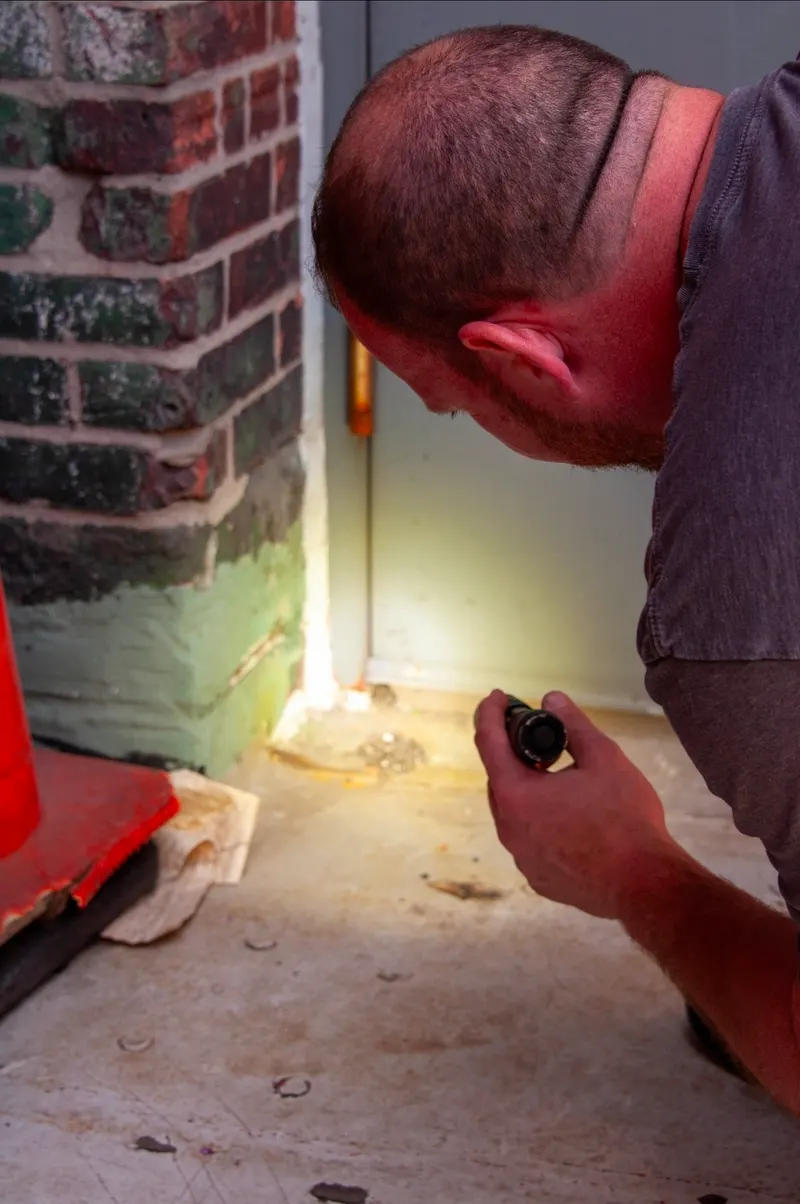
Rodent evidence tells you species, how current the activity is, and the direction the animals are traveling. On inspection we read five markers:
- Droppings — identify the species and how recent the activity is.
- Sebum — the greasy rub marks left along a heavily used travel path, indicating an established runway.
- Footprints — establish direction of travel.
- Tail drags — confirm direction and the width of the runway.
- Disrupted insulation — indicates nesting, not just travel.
Footprints and tail drags matter most, because direction of travel is what makes evidence actionable. Knowing a mouse is in a wall changes nothing. Knowing which way it moves, and where that runway originates, determines where the building has to be closed.
Do mouse traps work?
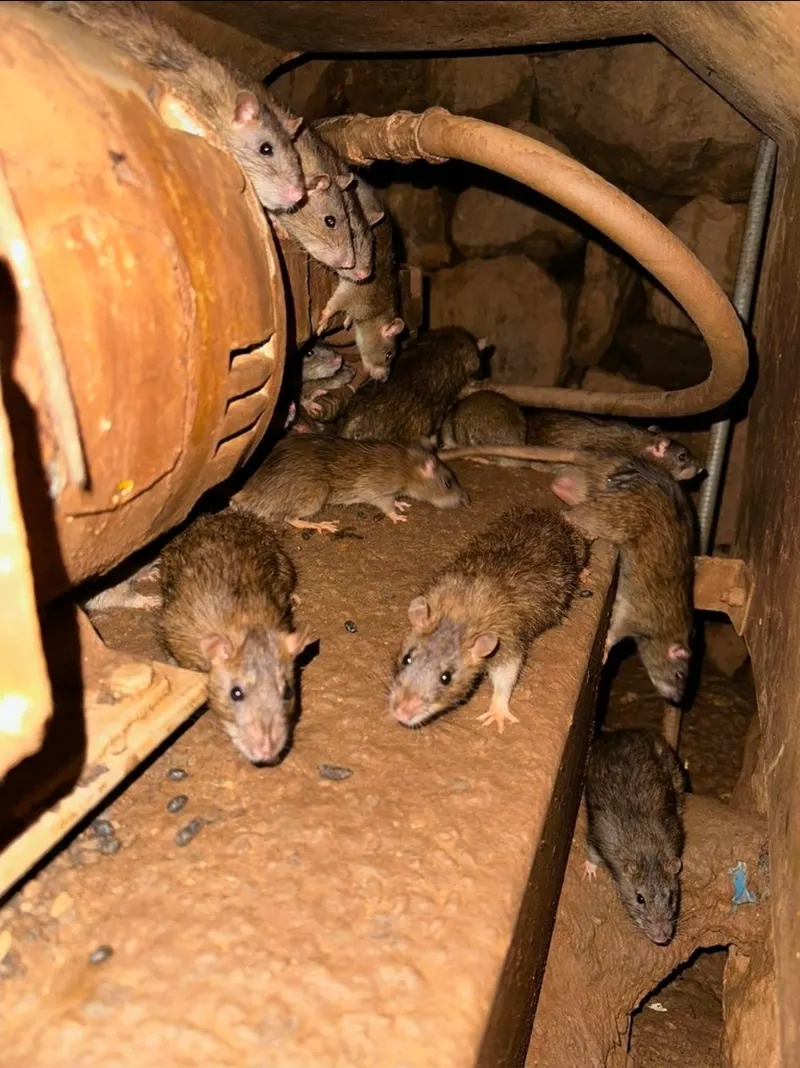
Traps work when they’re placed in an existing runway, and fail when the placement asks the animal to change its behavior. Rodents have poor eyesight and move on autopilot along established paths, so placement does the catching — not what sits on the trigger.
Graduate Pest Control doesn’t lure rodents to traps. We intercept them in the runways they already use. Traps are handled with gloves so no human scent is introduced, and novelty is removed rather than attraction added, using native droppings or nesting material from that same runway so the device doesn’t read as a new object in a familiar path.
More importantly, traps are a diagnostic tool. They confirm runways and direction of travel so the structure can be sealed. Removing rodents from a building that’s still open creates a vacancy — and the same seasonal pressure that filled it in October fills it again.
Why doesn’t sealing gaps with foam work?
Expanding foam is not a rodent exclusion material. Rodents chew through it, it degrades, and it conceals the structural defect from the next person who inspects the building. Graduate Pest Control does not foam gaps under any circumstances.
The materials that hold:
- Custom-fabricated 26-gauge galvanized sheet metal, cut and formed to the actual opening rather than stuffed into it.
- Xcluder door sweeps and fill fabric at doors, thresholds and utility penetrations.
- Xcluder GEO installed below grade where burrowing is the entry mechanism.
- BurrowRX and Selontra to manage exterior population pressure while exclusion work is completed.
Pest issues are building problems and they require permanent structural solutions. Exclusion is a permanent change to the structure — the difference between a rodent problem handled once and one handled every October.
Is the treatment the same for every building?
No. Method is dictated by the evidence, not by a fixed playbook. A confined void with a defined runway and heavy evidence calls for a different approach than open floor space with light scattered activity. A new introduction isn’t the same problem as an established colony. Exterior burrow pressure isn’t the same problem as an interior harborage or sanitation issue. Any company applying an identical protocol to all of them is guessing.
What can a homeowner check before the first cold?
Walk the exterior in September or early October and inspect these points in order of how often they turn out to be the entry:
- Garage door corners and bottom seal — the most common rodent entry point on Long Island homes.
- Exterior and basement door sweeps. Replace any that no longer contact the threshold across the full width.
- Dryer vents, AC line sets, gas and water penetrations — any place a utility passes through the exterior wall.
- Rooflines, soffit returns, gable and ridge vents, and the seam where an addition meets the original structure. This is where field mice get in — don’t stop at eye level.
- Tree limbs and vines contacting the roof or siding. Cut them back — field mice climb, and an overhanging branch is a bridge.
- Detached garages, sheds, pool houses and stored vehicles. Check for caches of seed, acorn shells or stashed pet food in insulation, boots, drawers and equipment covers.
- Woodline and stone wall edges. Field mouse pressure and tick pressure both concentrate where the lawn meets woods. Keep that edge cut back and clear of leaf litter.
- Firewood stacked against the foundation. Move it away from the house.
- Bird feeders and fallen fruit. Remove the feeder or manage the spill — spilled seed is the single largest field mouse attractant on most Long Island properties.
Why are older Long Island homes more vulnerable?
Older homes in Huntington, Northport, Commack, Smithtown and Kings Park are more vulnerable because of construction age and renovation history, not neglect. Fieldstone and rubble foundations, additions built over crawlspaces, and decades of utility work that left unsealed penetrations all create entry points invisible from inside the house. These buildings aren’t poorly maintained — they’re complicated, and they have to be read carefully.
What should you do if you already hear activity?
Address it immediately. Fall activity compounds through the winter. A mouse population that establishes in October is a substantially larger job by February, and rat burrow systems expand under the frost line where they’re harder and more expensive to reach.
Graduate Pest Control inspects the structure, identifies the species, reads the evidence, and delivers a plan that ends with the building closed — through house mouse and Norway rat control and permanent rodent exclusion, including commercial rodent programs for food and property management accounts.
The work behind this piece is Rodent Control, and everything else in this cluster is indexed on the blog hub.
Also in rodent pressure and the evidence it leaves
Common questions
Why do mice come into the house in the fall?
Mice come indoors in fall because outdoor cover and food disappear and soil cools, not because they're seeking warmth. The population was already on the property through the summer.
How small a hole can a mouse fit through?
A house mouse can pass through a gap of roughly 1/4 inch, about the width of a pencil.
What is the difference between a field mouse and a house mouse?
A field mouse (white-footed or deer mouse) has a sharply bicolored tail, white feet, a white belly with a clean dividing line, and larger eyes and ears. A house mouse is uniformly gray with a single-colored tail and a musky odor. Field mice cache seeds and nuts, climb well, and enter buildings seasonally in fall, while house mice live indoors year round.
Do field mice carry disease on Long Island?
The white-footed mouse is a primary reservoir host for tick-borne pathogens in the Northeast, including the bacterium that causes Lyme disease. Properties with heavy field mouse activity along a woodline typically have elevated tick pressure as well, and both should be assessed together.
Are there roof rats on Long Island?
Roof rats are not a typical Long Island or New York pest. The three species that account for nearly all local activity are the house mouse, the field mouse and the Norway rat.
Does steel wool or expanding foam stop mice?
No. Both degrade and rodents work through them. Permanent exclusion uses custom-fabricated 26-gauge galvanized sheet metal, Xcluder fill fabric and door sweeps, and below-grade barriers where burrowing is the entry route.
Is rodent exclusion a one-time service?
Exclusion is a permanent structural modification rather than a recurring treatment. Ongoing monitoring remains necessary because exterior pressure, construction changes and property conditions continue to change year over year.
What areas does Graduate Pest Control serve?
Graduate Pest Control serves Nassau County and Suffolk County on Long Island, including Huntington, Northport, Commack, Smithtown and Kings Park, and the New York City boroughs of Manhattan, Brooklyn and Queens.
Get in touch
Tell us what you are seeing
Four questions, answered by a person within one business day. If it is urgent, call — the line is answered at any hour.
Rodent Control
Start with a free consultation
A consultation is a phone call with us about your problem. You tell us what you are seeing, where in the building, and how long it has been going on. We tell you what it most likely is, what is causing it, and what it will take to fix. Most routine work can be priced on that call.
There is no charge and no obligation. If we are not the right fit, we will say so before anyone books a visit.
Call (631) 212-9601Schedule an inspection
Answered at any hour.