
Acheta domesticus
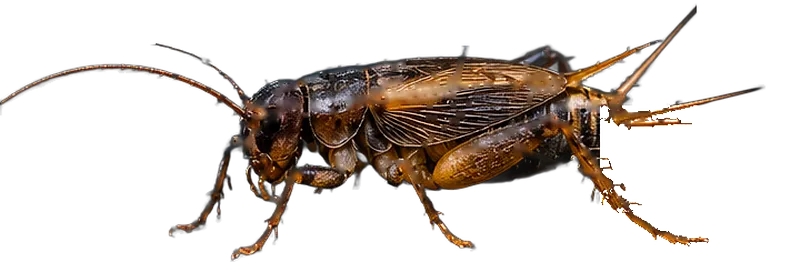
- 01Long antennae. Slender and longer than the body.
- 02Banded head. Three dark bands across a light yellowish-brown head.
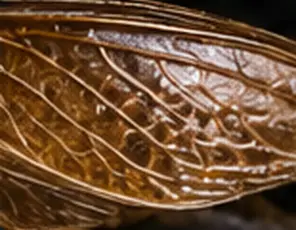
- 03Full wings. Adults have working wings. Males rub them together to chirp.
- 04Tail appendages. Two cerci. Females also have a long, thin egg-laying tube.
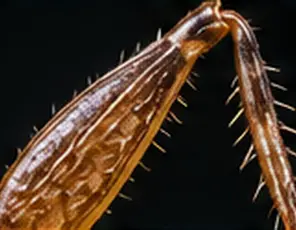
- 05Jumping hind legs. Thick thighs and spined lower legs.
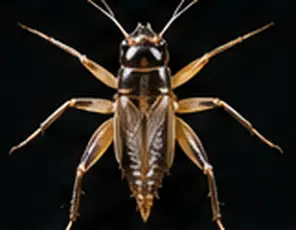
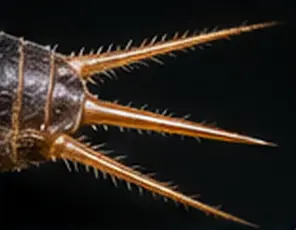
- Body
- 3/4 to 7/8 in
- Color
- Light yellowish brown, three dark bands on the head
- Wings
- Yes. Males chirp at night
- Lives
- Warm spots: utility rooms, behind appliances, near furnaces
- Indoors
- Can breed indoors year round
Figures: University of Maryland Extension, Crickets, University of Florida, Crickets (ENY-230).
What does a house cricket look like?
About 3/4 to 7/8 inch long, light yellowish brown, with three dark bands across the head. The antennae are slender and longer than the body, the hind legs are built for jumping, and adults have full wings. Females carry a long, thin egg-laying tube between the two tail appendages.
Is it the same as a field cricket?
No. The field cricket is a different species, more robust, black or dark brown, and usually found in lower floors and basements in fall. Both chirp, but the house cricket is the one that can settle in and breed indoors.
Where do they hide?
Warm, dark places during the day: behind and under appliances, near furnaces and water heaters, in utility rooms, behind baseboards and in clutter. They come out at night to feed and chirp.
How Graduate handles house crickets
We find where they are getting in and where they are living, then seal entry points at doors, the foundation and utility penetrations, recommend lighting changes that stop drawing them in, and place monitors to confirm the result. Our cricket control page covers the whole process.
Which cricket is it?
Look for wings and listen. One chirps, one never makes a sound. Tap a cricket for its full profile.
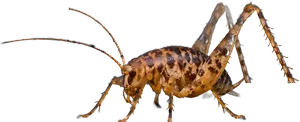
- Size
- 1/2 to 1 1/4 in
- Look
- Humped, mottled, huge hind legs
- Wings
- None. Never chirps
- Lives
- Damp basements, crawl spaces, garages
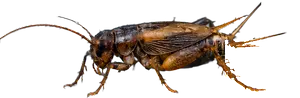
- Size
- 3/4 to 7/8 in
- Look
- Light brown, three dark bands on the head
- Wings
- Yes. Males chirp at night
- Lives
- Warm, dry spots near heat
Figures: University of Maryland Extension, Crickets, University of Florida, Crickets (ENY-230).
Treatment for this pest is covered under Cricket Control.
Common questions
How do I find the cricket that is chirping?
Only males chirp, by rubbing their wings together, and they go quiet when you get close. Look in warm, sheltered spots: behind the water heater, furnace, washer, dryer and refrigerator, and along baseboards in utility rooms.
Is it a house cricket or a field cricket?
House crickets are light yellowish brown with three dark bands on the head. Field crickets are a different species, larger and black or dark brown, and they rarely survive long indoors.
Can house crickets damage anything?
In numbers, yes. They have been known to chew wool, silk, cotton, nylon, leather and paper, and dead crickets can cause odor where many collect.
Why are there more in the fall?
Crickets move toward buildings as nights cool, and they are drawn to lights. Bright porch and window lights pull them right to the door.
Can they breed inside?
Yes. House crickets can live and reproduce indoors indefinitely in heated buildings, which is why a few can turn into a steady problem.
How do you keep crickets out?
Seal gaps at doors, foundation and utility lines, add door sweeps, switch outdoor lights to yellow bug lights, and clear mulch, leaves and debris away from the foundation.
Get in touch
Tell us what you are seeing
Four questions, answered by a person within one business day. If it is urgent, call: the line is answered at any hour.
Cricket Control
Start with a free consultation
A consultation is a phone call with us about your problem. You tell us what you are seeing, where in the building, and how long it has been going on. We tell you what it most likely is, what is causing it, and what it will take to fix. Most routine work can be priced on that call.
There is no charge and no obligation. If we are not the right fit, we will say so before anyone books a visit.
Call (631) 212-9601Schedule an inspection
Answered at any hour.