
Rhaphidophoridae
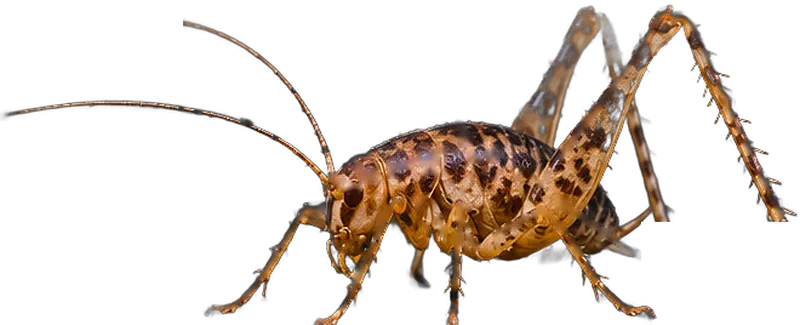
- 01Very long antennae. Often longer than the body, always moving.
- 02Humped back. The arched, camel-like profile that gives it the name.
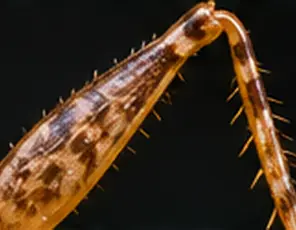
- 03Huge hind legs. Long, spined jumping legs. It leaps when startled, often toward you.
- 04No wings. Always wingless, so it cannot fly and never chirps.
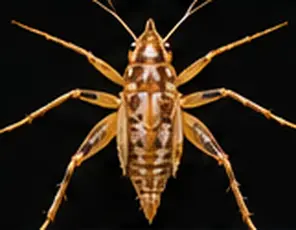
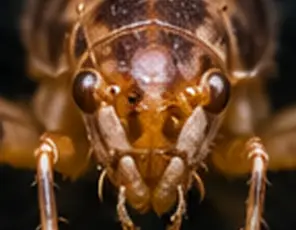
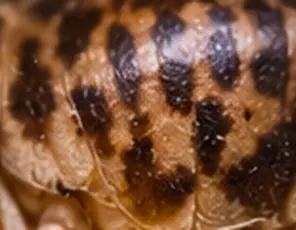
- Body
- 1/2 to 1 1/4 in
- Color
- Light tan to dark brown, often mottled
- Wings
- None. Silent
- Lives
- Damp basements, crawl spaces, garages, sheds
- Most common in homes
- The greenhouse camel cricket, an Asian species
Figures: University of Maryland Extension, Crickets, Epps et al., PeerJ (2014), camel crickets in North American houses.
What does a camel cricket look like?
A humpbacked, wingless cricket with a body 1/2 to 1 1/4 inch long, light tan to dark brown and often mottled. The antennae are very long, often longer than the body, and the hind legs are huge, which gives it a spidery look and the nickname spider cricket. Seen from the side, the arched back looks like a camel’s hump.
Which camel cricket is in my basement?
In homes across the eastern United States, the most common one is usually the greenhouse camel cricket, an Asian species first found in a Minnesota greenhouse in 1898. Researchers at North Carolina State University found it far outnumbers native camel crickets in and around houses. Its banded, mottled tan and brown pattern is typical of what we find in basements on Long Island.
Why are they inside?
Moisture. Camel crickets live in dark, damp places and come in through gaps at the foundation, under doors, around basement windows and where pipes and wires enter. A wet basement or crawl space can support them year round.
How Graduate handles camel crickets
We treat it as a moisture and entry problem. We find where they are getting in and where the humidity is coming from, then seal the gaps with durable materials, add door sweeps and recommend dehumidification or drainage fixes where needed. Sticky monitors confirm the result. See cricket control for the full approach.
Which cricket is it?
Look for wings and listen. One chirps, one never makes a sound. Tap a cricket for its full profile.
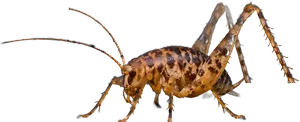
- Size
- 1/2 to 1 1/4 in
- Look
- Humped, mottled, huge hind legs
- Wings
- None. Never chirps
- Lives
- Damp basements, crawl spaces, garages
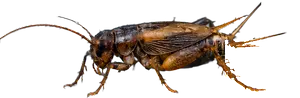
- Size
- 3/4 to 7/8 in
- Look
- Light brown, three dark bands on the head
- Wings
- Yes. Males chirp at night
- Lives
- Warm, dry spots near heat
Figures: University of Maryland Extension, Crickets, University of Florida, Crickets (ENY-230).
Treatment for this pest is covered under Cricket Control.
Common questions
Do camel crickets bite?
No. They have chewing mouthparts and will eat almost anything organic, including each other, but they do not bite people or pets.
Why do they jump at me?
They jump when startled, and in a tight basement that jump often goes toward the person who disturbed them. It is an escape reflex, not an attack.
Why are they always in the basement?
They need high humidity and darkness. Damp basements, crawl spaces, garages, sheds and window wells are the closest thing to the caves they evolved in.
Do they chirp?
No. Camel crickets have no wings, so they cannot make the chirping sound. A chirping cricket in the house is a house cricket or a field cricket.
Are they native?
Some are, but a 2014 North Carolina State University study found that the Asian greenhouse camel cricket is now far more common in eastern U.S. homes than the native species.
How do you keep them out?
Lower the moisture and close the entry points. A dehumidifier, drainage away from the foundation, door sweeps and sealed gaps around the foundation, sill and utility lines do more than spraying ever will.
Get in touch
Tell us what you are seeing
Four questions, answered by a person within one business day. If it is urgent, call: the line is answered at any hour.
Cricket Control
Start with a free consultation
A consultation is a phone call with us about your problem. You tell us what you are seeing, where in the building, and how long it has been going on. We tell you what it most likely is, what is causing it, and what it will take to fix. Most routine work can be priced on that call.
There is no charge and no obligation. If we are not the right fit, we will say so before anyone books a visit.
Call (631) 212-9601Schedule an inspection
Answered at any hour.