
Stinging insects and the nesting season · reviewed November 2026
What happened at the front door?
In August, a Long Island homeowner came home after a long day at work and walked straight through an active yellow jacket flight path at the front door. They were stung several times before they could get inside. The next call they made was to us.
Beneath the entrance to that front door was a nest of roughly 4,500 yellow jackets, built in four tiered combs, with an estimated 2,600 wasps going in and out of it every day. Within two days the nest was gone, nobody else was stung, and the only insecticide used on the job was a single short application inside the nest itself.
This is the record of how it was found, how it was taken out and why it was done in that order. It is a good example of how we work on stinging insects generally: find the nest, not just the hole, remove the colony before anything is opened, and close the building afterward so the site is not used again.
How did the yellow jackets get into the house?
A yellow jacket queen in spring is looking for one thing: a dry, protected cavity with a small entrance she can defend. This house offered one at the front door.
A piece of wood under the door frame had weakened. The queen chewed around the silicone caulking to reach the void in the floor below, and then chewed back the edge of the wood to open a quicker flight path for the colony. From the outside it looked like a little weathering at the sill. Underneath it was the entrance to a nest that would hold thousands of wasps by late summer.
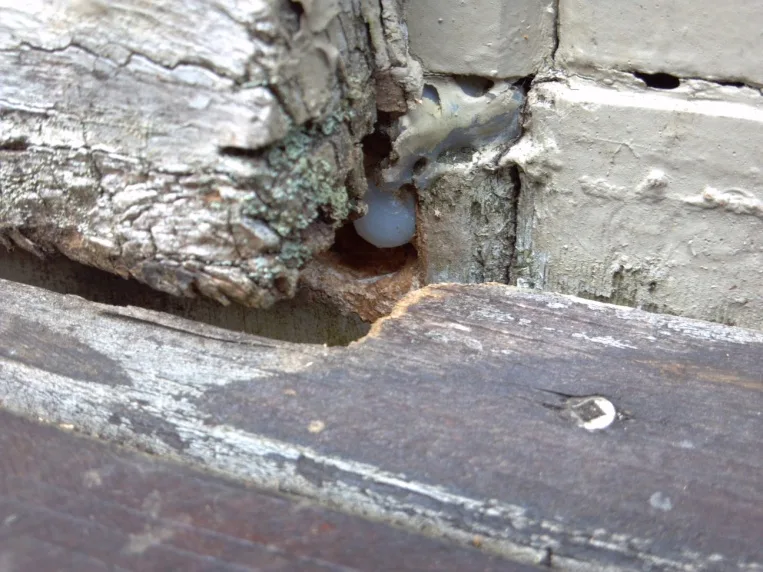
That detail matters more than anything else in this story. The nest did not choose the house at random. A single failed piece of wood at the threshold gave a queen a protected cavity right beside the busiest doorway on the property, which is the worst possible place for a colony to be in August.
Where do yellow jackets usually build?
Yellow jackets look for holes and protected voids: openings in buildings, the soil of flower beds, the inside of dense shrubs, old rodent burrows in a lawn. Anywhere that is sheltered, dry and out of direct sun.
This one was in a floor void under the front door sill, covered by a loose batt of insulation. The traffic was visible from outside, but the nest itself was not. To find it we went down to the basement and worked toward the front of the house, listening. A colony of several thousand wasps makes a steady, audible hum through a floor, and it led directly to the insulation batt below the door.
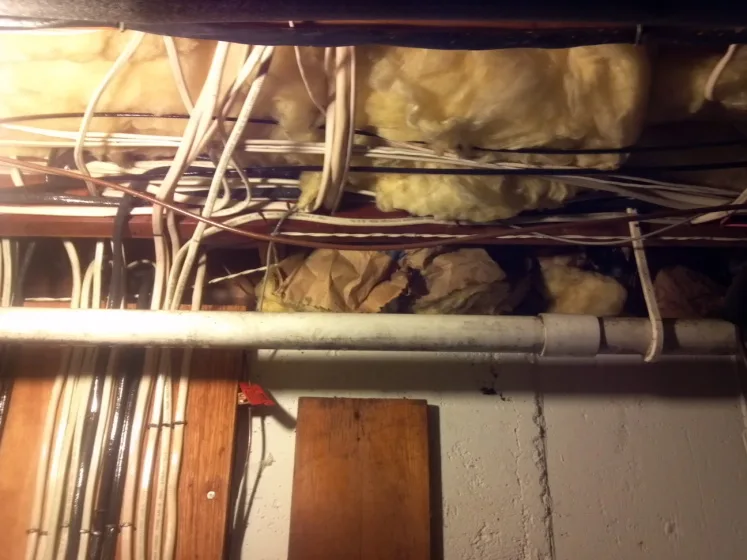
The insulation was peeled back slowly. The goal at this stage is to see the nest without touching it. The paper envelope around a yellow jacket nest is the colony’s wall, and tearing it open in a basement would have sent a swarm of agitated adults into the house.
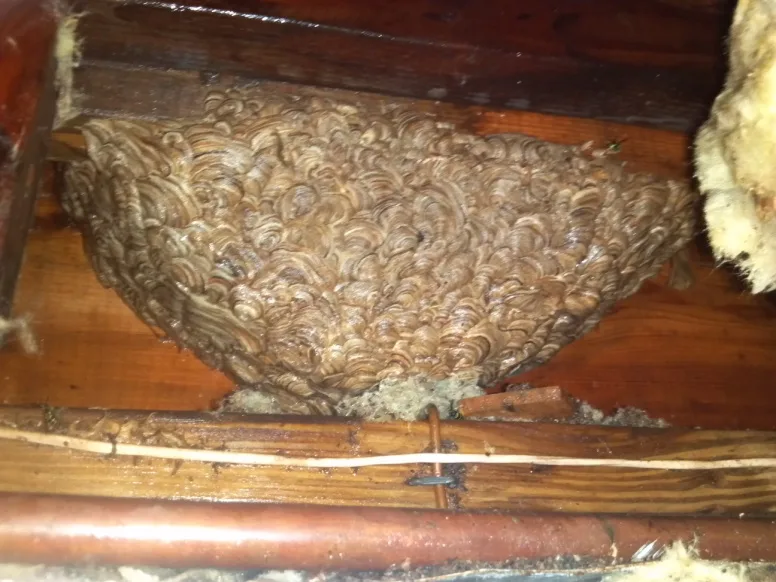
How big was the nest?
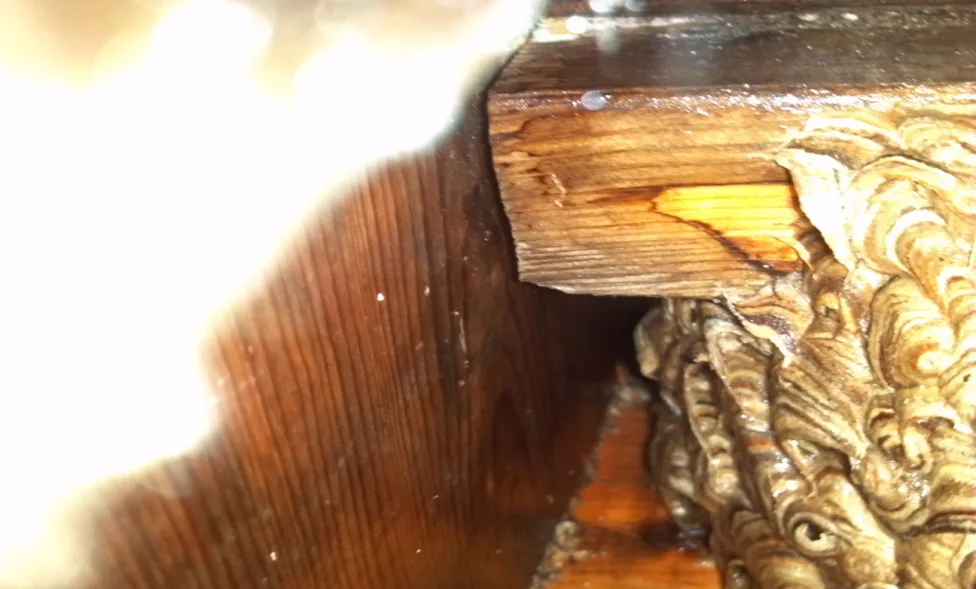
The paper envelope measured 18 inches long, 11 inches deep and 4 inches wide. When the insulation came away there were five sentry wasps sitting on the outside of it, and workers were coming and going from both ends.
The nest had two exits. The secondary exit was on the right side.
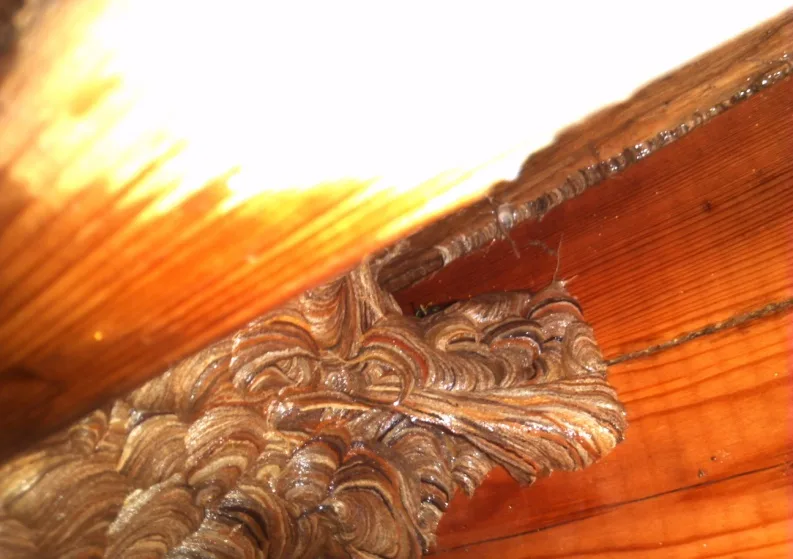
The main entrance was on the left, and it ran straight to the opening at the front door sill. That was the route the homeowner walked through.
How do you remove a nest like this with as little pesticide as possible?
With a vacuum, and with patience for one or two days.
We set up a wasp vacuum system at the nest. It is a self-contained vacuum on a digital timer that switches on at dawn and off at dusk. An extension wand is fixed securely to the nest opening, set far enough back that wasps can still leave the nest, but close enough that wasps flying home are pulled into a holding canister.
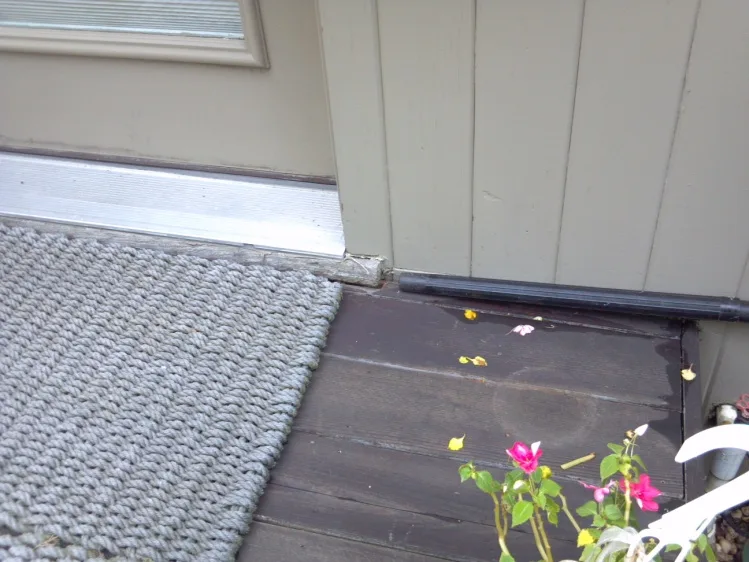
The idea is simple. A yellow jacket colony depends on its foragers, and foragers come home all day long. Running the vacuum from sunrise to sunset collects them as they return, one trip at a time, without anyone opening the nest or standing in the flight path. Over a day or two the adult workforce is gone, and a nest without its adults can be handled safely.
When does insecticide come in?
Only after the adults were out, and only inside the nest.
With the workers collected, the inside of the nest was treated with a small amount of aerosol insecticide, delivered directly into the intact paper envelope. Because the envelope was still whole, the treatment stayed inside it. The application took about two seconds. It stopped the developing larvae and killed any adults still tending the nest.
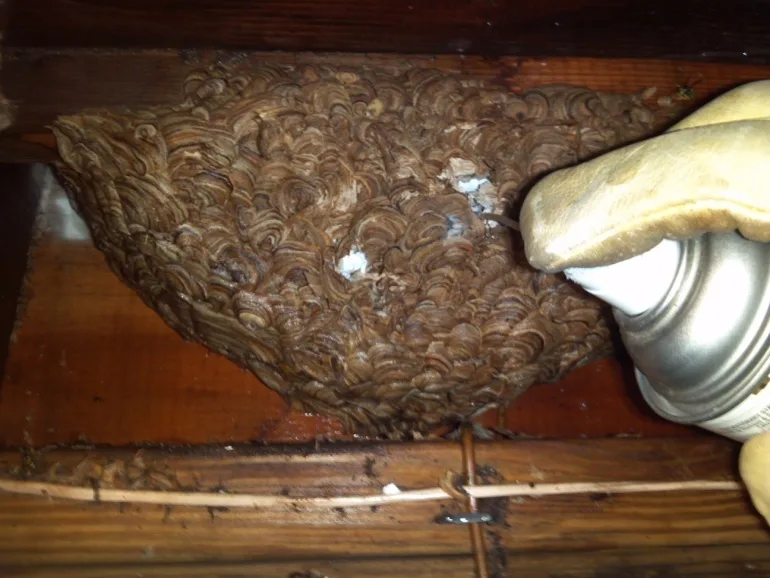
This is the order that keeps the pesticide use small. Spraying first, at the entrance, would have meant more product, a colony that was angry and still mostly alive, and wasps looking for another way out of a nest that sits inside the house. Removing the adults first turns the treatment into a short, contained finishing step.
What does the inside of a yellow jacket nest look like?
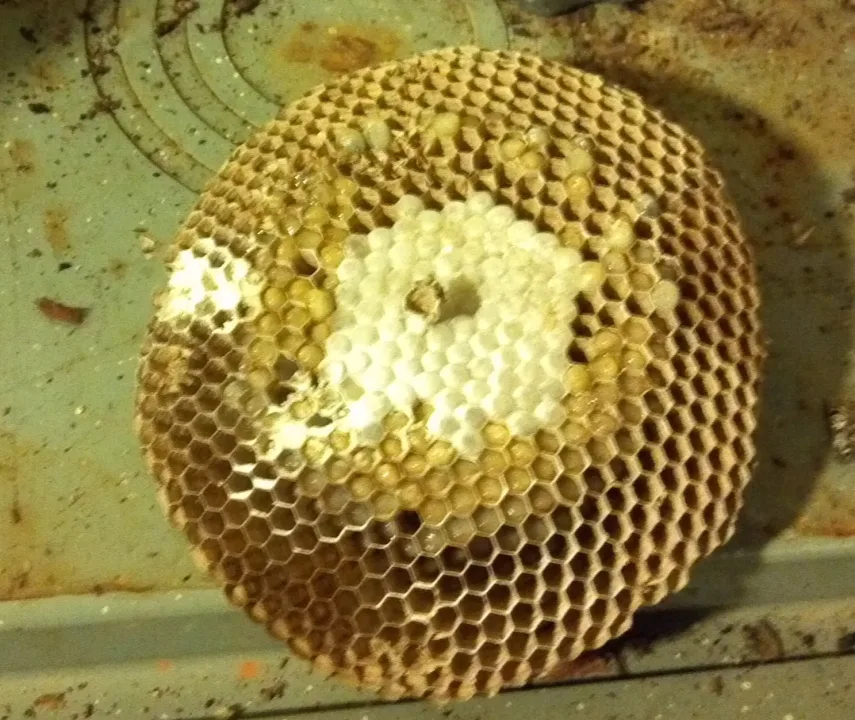
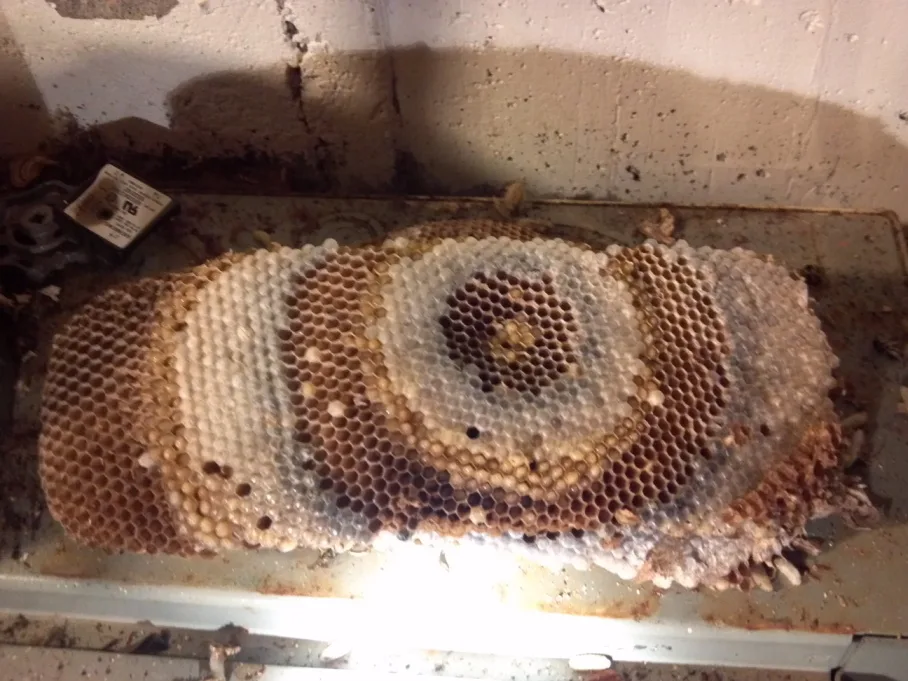
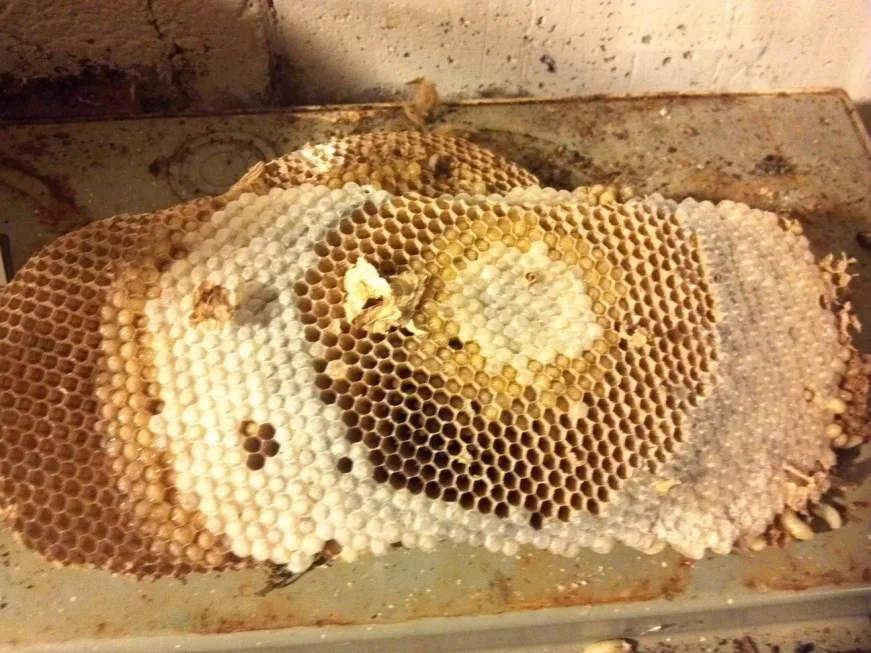
Once the treatment was done, the paper envelope came off and exposed the combs: tiered paper layers holding growing larvae, capped pupae and the empty cells the adults had already emerged from.
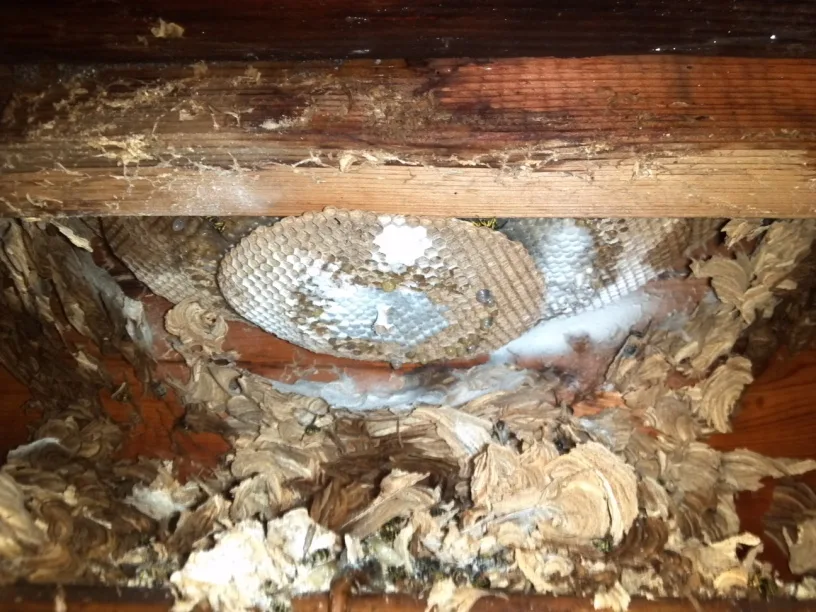
A yellow jacket nest is built as a stack of horizontal combs, wider in the middle and narrowing toward the bottom. This nest had four. The first one exposed was the bottom comb, the newest and smallest, about 6 inches across.
Comb four
The bottom comb had 583 cells. About 240 of them, roughly 41 percent, held larvae or capped pupae. Most of the rest were empty cells that had already produced adult wasps.
Comb three
Comb two
Comb one
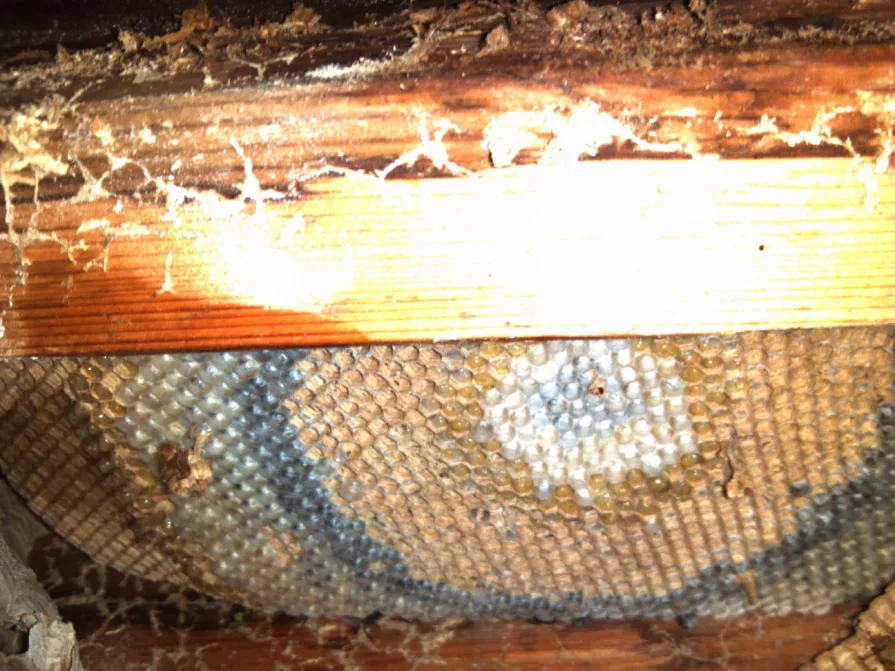
Combs one through three were each more than twice the size of comb four, and each held somewhere between 1,200 and 1,500 cells. Added together, that is how a nest under a single doorstep reaches roughly 4,500 wasps by August.
How long did it take, and how did the job end?
The vacuum collected the active adults over two days. It was left running through the rest of the second day to catch any stragglers still coming home, and it was taken out the following day.
Then the opening at the door frame was sealed. That last step is the part most people skip, and it is the part that decides whether the house has the same problem next summer. The colony itself does not survive the winter, but the cavity and the gap that made it attractive are still there unless someone closes them, and next year’s queens are looking for exactly that kind of space. Why some houses produce a nest year after year is covered in more detail in where wasp queens spend the winter.
What should you take from this if you have yellow jackets at a door?
Yellow jackets are territorial, and unlike honey bees they can sting repeatedly. A nest beside a doorway, a deck step or a play area is a different situation from one at the back of the property, and late summer is when colonies are largest and most defensive.
- Do not block or seal the hole while wasps are using it. With the nest inside the structure, the colony’s other exits may lead into the house.
- Do not pour liquids or spray into the opening. The nest is usually well back from the hole, and you will be standing in the flight path when the guards respond.
- Note where the traffic goes and how heavy it is. That is the most useful information you can give whoever comes out, and it does not require getting close.
- Make sure it is yellow jackets. If the insects are honey bees, the right call is a beekeeper rather than pest control. The eastern yellowjacket profile in the pest library covers identification.
The method behind this job, finding the nest rather than treating the hole, removing the colony before opening anything and closing the building afterward, is how we handle wasp and hornet removal in general, and the sealing work underneath it is structural exclusion.
If you have yellow jackets coming and going from the same spot at your house, tell us where they are going in. The consultation is free.
The work behind this piece is Wasp & Hornet Removal, and everything else in this cluster is indexed on the blog hub.
Also in stinging insects and the nesting season
Common questions
How did the yellow jackets get under the front door?
A queen found a weakened piece of wood under the door frame, chewed around the caulking to reach the void in the floor below, and widened the edge of the wood into a fast flight path. Everything after that, the nest, the workers and the traffic at the step, grew from that one opening.
How do you find a yellow jacket nest you cannot see from outside?
Follow the traffic to the opening, then find the cavity from the other side. In this house that meant going into the basement toward the front wall and listening. An active colony of several thousand wasps is audible through a floor void, and the sound led straight to an insulation batt under the door sill.
Why not just spray the hole the wasps are using?
Because the nest is not at the hole. It was sitting in a cavity under the floor, and a spray at the entrance reaches the guards and little else. It also agitates the colony, and with the nest inside the house the agitated wasps look for another way out, which can be into the living space.
How does a wasp vacuum remove a nest?
A wand is fixed at the nest entrance and the vacuum runs on a timer from dawn to dusk. Wasps can leave, but foragers coming home are pulled into a holding canister. Over a day or two that takes out the adult workforce, which is what makes the nest safe to open and treat.
Was a pesticide used at all?
Yes, once and in a small amount. After the adults were collected, a two second aerosol application went directly inside the intact paper envelope to stop the developing larvae and any remaining attendants. Keeping the envelope intact is what kept the treatment contained.
Can I seal the opening myself while the nest is active?
Do not. Sealing an entrance while there is traffic at it pushes the colony toward its other exits, and in a floor or wall void those can point into the house. The opening is sealed after the colony is gone, which is the last step of the job, not the first.
Will the yellow jackets come back to the same spot next year?
The colony does not survive the winter, but the site can be used again by a new queen if the opening and the cavity are still there. That is why the entry at the door frame was sealed once the nest was out.
Get in touch
Tell us what you are seeing
Four questions, answered by a person within one business day. If it is urgent, call: the line is answered at any hour.
Wasp & Hornet Removal
Start with a free consultation
A consultation is a phone call with us about your problem. You tell us what you are seeing, where in the building, and how long it has been going on. We tell you what it most likely is, what is causing it, and what it will take to fix. Most routine work can be priced on that call.
There is no charge and no obligation. If we are not the right fit, we will say so before anyone books a visit.
Call (631) 212-9601Schedule an inspection
Answered at any hour.